
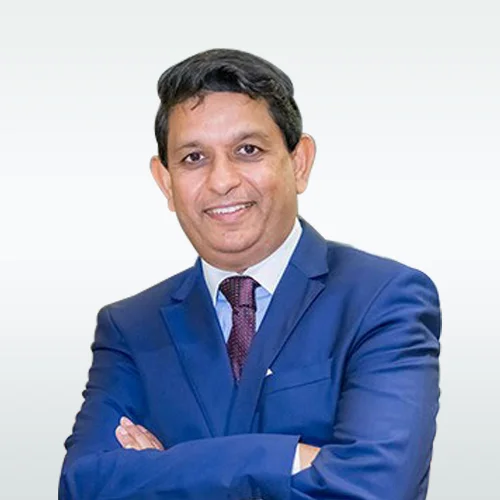
Dr. Sandeep Jain
Director / General Dentist
BDS, MDS, Adv Dip (Perio)
MRD RCSEd (UK), MRACDS (Aust)
Speaks English, Hindi
Both Bayside Dental clinics in Discovery Bay (North Plaza and Main Plaza) offer tooth fillings, using mercury-free, tooth-coloured composite resin to repair cavities, chipped teeth and small cracks. Most fillings are done in a single visit and take about 30 to 45 minutes per tooth.
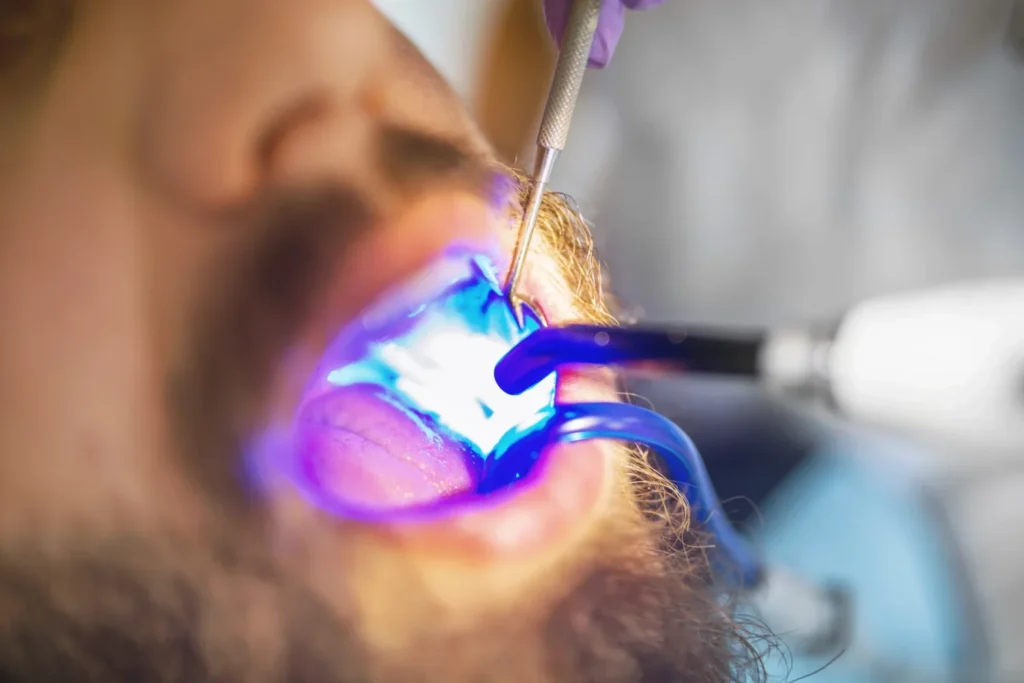
A filling repairs damaged tooth structure. It restores the tooth’s shape and chewing function and seals the gap so bacteria can’t get further in. Common reasons include:
Once a cavity has formed, it won’t heal on its own. The earlier it’s treated, the less tooth needs to be removed; once decay reaches the nerve, a root canal may be needed.
Both our Discovery Bay clinics are mercury-free: we do not use silver (amalgam) fillings, and mainly use tooth-coloured composite resin. These are the common mercury-free filling materials in Hong Kong; your dentist will recommend an approach based on the size of the cavity, the tooth’s position and your bite:
| Material | Key features | Typically used for |
|---|---|---|
| Composite resin (white filling) | Tooth-coloured, bonds directly to the tooth, preserves more healthy tooth structure | Front teeth and most small-to-medium cavities; the most common choice |
| Glass ionomer | Releases fluoride, less irritating to the tooth’s nerve | Areas near the gumline, baby teeth, temporary repairs |
| Ceramic inlay | Custom-made by a dental lab, hard-wearing, colour-stable | Larger areas of damage on back teeth; usually two visits |
If too much of the tooth is missing for a filling to withstand biting forces, your dentist may recommend a crown instead.
The dentist checks the tooth, takes an X-ray if needed, and numbs the area if needed.
Decayed and softened tooth structure is carefully removed.
The surface is cleaned and prepared so the material bonds securely.
The filling material is placed in layers to rebuild the tooth’s shape.
A blue light hardens the resin.
The filling is polished and your bite is checked so it feels natural.
A typical filling takes about 30 to 45 minutes per tooth and is usually completed in one visit.
If anaesthetic is needed, the dentist first applies a numbing gel and then gives a local anaesthetic with a fine needle. Once it takes effect, most people feel only slight pressure or vibration, not pain. Repairing a very small chip sometimes needs no anaesthetic at all. If you feel anxious about dental visits, ask about sedation dentistry.
The cost of a filling depends mainly on the size of the cavity, the number of tooth surfaces involved (one, two or more), the tooth’s position and the material. Decay that reaches between teeth or involves more surfaces takes more time and skill, so it costs more. Examination and X-rays are usually charged separately.
| Treatment | Fee range (HKD) |
|---|---|
| Composite resin filling | $900 – $3,000 |
| Glass ionomer filling | $900 – $1,500 |
| Crown / inlay (per unit) | $7,700 – $12,000 |
Figures are based on the Prince Philip Dental Hospital (PPDH) private patient fee schedule and are for reference only; they are not our clinic’s actual pricing, and your fee is confirmed after an examination. See the full Hong Kong Dental Treatment Fee Reference. We accept Elderly Health Care Vouchers.
| Filling | Crown | Composite / porcelain veneer | |
|---|---|---|---|
| Typically used for | Small to medium cavities, small chips | Large damage, back teeth after a root canal, deeper cracks | Front-tooth appearance: small chips, gaps, discolouration |
| Tooth structure removed | Less, only the decayed part | More, covers the whole tooth | A small amount, mainly the front surface |
| Visits | Usually one | Usually two | Composite one; porcelain usually two |
In short, a filling comes first when the damage is small. A crown is for larger damage or a weakened tooth, and veneers are mainly for the look of front teeth.
A chipped or cracked tooth won’t heal on its own, and a crack can deepen under biting pressure. Before your appointment:
Treatment depends on the damage: a tiny chip can be polished smooth; a small chip can be rebuilt with tooth-coloured resin; larger damage may need a crown; and if the crack reaches the nerve, a root canal is needed first.
For severe pain, a large break or an injury outside clinic hours, call our after-hours line on 6071 4530 or see Emergency Dentist.
Most fillings take about 30 to 45 minutes per tooth and are done in one visit. If anaesthetic is needed, the dentist numbs the area first, so you’ll usually feel only slight pressure or vibration, not pain. If you’re anxious, ask about sedation dentistry.
Based on the PPDH private patient fee schedule, a composite resin filling is about HK$900–$3,000 and a glass ionomer filling about HK$900–$1,500. Fillings are usually priced by the number of surfaces involved (one, two or more) and complexity, not simply per tooth, and examination and X-rays are usually extra. For reference only; this is not our clinic’s actual pricing, and your fee is confirmed after an examination. See the fee reference page.
Common mercury-free options are composite resin, glass ionomer and ceramic inlays. Composite is tooth-coloured and the most widely used; glass ionomer releases fluoride and is often used near the gumline or in baby teeth; ceramic inlays are made by a dental lab and suit larger areas on back teeth. No single material suits every case, so your dentist will advise based on the cavity’s size, position and your bite.
No. Both our Discovery Bay clinics are mercury-free: we do not use silver (amalgam) fillings, and mainly use tooth-coloured composite resin.
Keep the piece if you have it, avoid chewing on that side and book an appointment soon. Until it’s repaired, bacteria can collect in the gap and the tooth may be sensitive. The dentist will check for new decay or cracks before replacing the filling or suggesting another restoration.
Mild sensitivity to hot or cold, or slight discomfort when biting, is common for a few days and usually settles. Contact us if the pain persists or gets worse, the filling feels high when you bite, or sensitivity hasn’t improved after one to two weeks; your bite may need adjusting or the tooth may need further treatment.
With good care, fillings usually last about 7 to 15 years or more. It depends on the material, the size and position of the filling, your oral hygiene, and habits such as grinding. Regular check-ups catch new decay at the edges or wear early.
In most cases you can eat straight away. If you had a local anaesthetic, it’s best not to eat until the numbness wears off (usually about 1–2 hours), so you don’t bite your cheek or tongue, and avoid very hot food so you don’t burn yourself. Avoid very hard or sticky food at first.
Yes, as long as enough healthy tooth structure remains. Teeth that have been filled many times or have very large fillings become weaker, though, and may eventually need a crown for support.
For small to medium cavities or small chips, a filling usually comes first because only the decayed part is removed, preserving as much healthy tooth as possible. Large damage, back teeth after a root canal or deeper cracks are better suited to a crown; for the appearance of front teeth, consider veneers.
A small chip can usually be rebuilt with tooth-coloured resin in one visit, and a tiny chip can simply be polished smooth. If the break is large or has reached the nerve, a crown or root canal may be needed. Before your visit, rinse with warm salt water, avoid chewing on that side and keep any broken piece.
Tooth-coloured materials such as composite resin are non-metallic and mercury-free, and generally don’t affect MRI scans. It’s still a good idea to tell the radiographer about your dental work before an MRI.
Yes. Decay in baby teeth still needs treatment so it doesn’t affect chewing or the adult teeth underneath. The dentist chooses a suitable material for your child; see Kids Dentistry and our Guide to Cavities in Baby Teeth.
Yes. We accept Elderly Health Care Vouchers. Eligible Hong Kong residents aged 65 or above can use them for dental services provided by a registered dentist, including fillings. The amount you can use depends on your voucher balance, so please mention it when booking and bring your Hong Kong Identity Card to the appointment.
Director / General Dentist
BDS, MDS, Adv Dip (Perio)
MRD RCSEd (UK), MRACDS (Aust)
Speaks English, Hindi

General Dentist
BDS (HK)
Speaks: English, Cantonese, some French and Mandarin
Works in Main Plaza Clinic

General Dentist
BDS (Malaya)
Speaks English, Mandarin, Cantonese, Malay

Your dentist will examine the tooth, take an X-ray if needed, and talk you through the right treatment and cost. Both clinics are in Discovery Bay — choose the one closest to you: