

Dr. Purvi Ankit Gohil
Registered Dentist
BDS (Maharashtra University of Health Sciences, India)
Speaks English, Hindi
Over time, several factors can cause teeth to lose their natural whiteness. Our Discovery Bay dentists commonly see:
With professional teeth whitening at Bayside Dental Discovery Bay, we tackle these issues to give you a dazzling result.
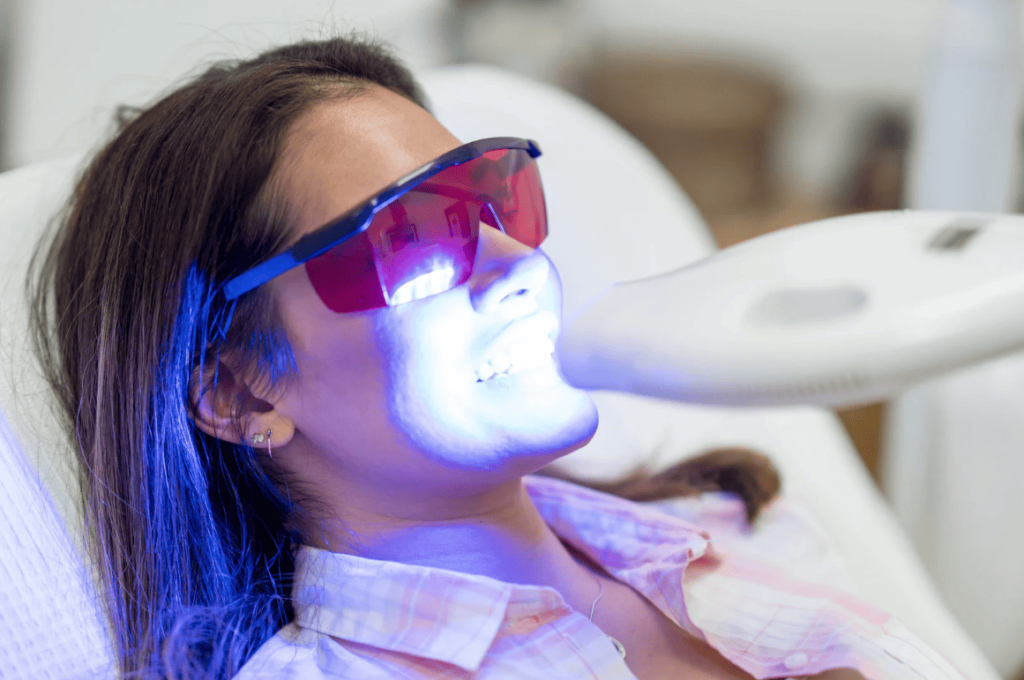
Our in-clinic teeth whitening treatment delivers dramatic results in just one 2-hour visit. Here’s our two-step process:
This method is ideal for most patients, but note: crowns, veneers, or composite fillings won’t whiten. If you have these, replacements may be needed post-treatment for a uniform look.
Professional teeth whitening at the clinic is done on the same day, in one visit of about 2 hours. A typical appointment runs like this:
When a dentist supervises it, peroxide whitening lightens the colour of your teeth without removing enamel. Enamel damage is mainly linked to overuse or to DIY methods such as acidic or abrasive home remedies, so follow your dentist’s instructions. Short-lived sensitivity is common, usually most noticeable in the first day or two, and it settles on its own; a sensitivity toothpaste can help. Whitening doesn’t change the colour of crowns, veneers or fillings. If you are planning new ones, tell your dentist, as they can be made after whitening to match your new shade.
Prefer whitening at your own pace? Our teeth whitening at-home kits are a cost-effective alternative. Here’s how it works:
This option suits busy schedules or those seeking gradual whitening with professional-grade tools.
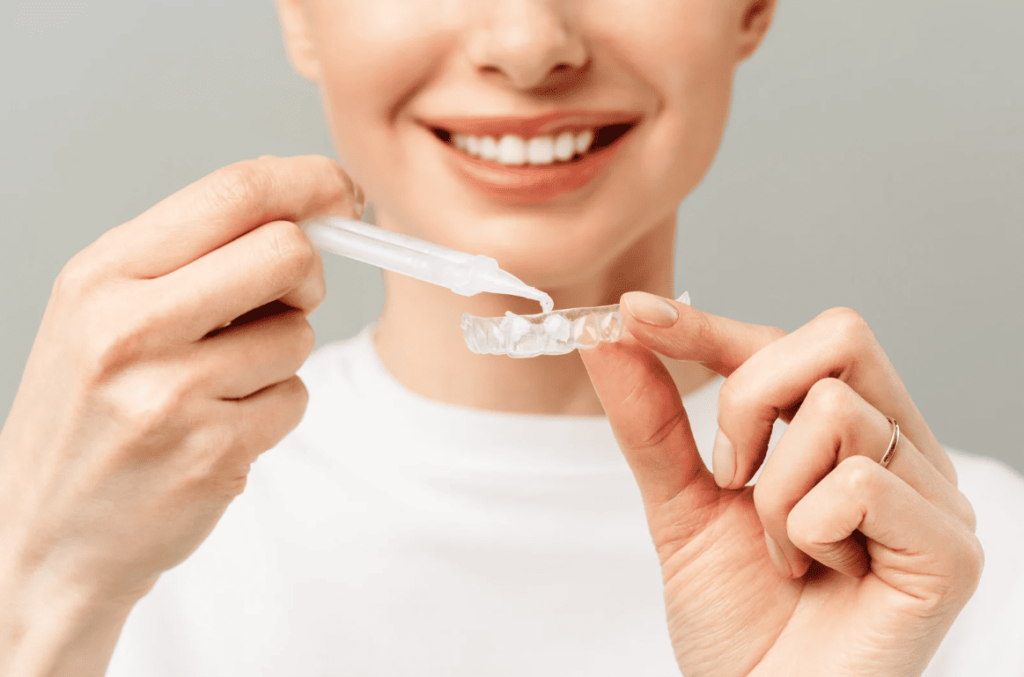
Whether you choose in-clinic whitening or the convenience of whitening at home, teeth whitening at Bayside Dental Discovery Bay aims for a natural, even shade.
Book a consultation to see which teeth whitening option fits your goals!
Teeth whitening cost depends mainly on whether you whiten at the clinic or at home. The Prince Philip Dental Hospital private patient fee schedule lists in-clinic (light-activated) whitening at HK$4,800–$10,000, and take-home whitening trays at HK$2,800–$6,000 per visit. Which option suits you depends on the type of staining and the shade you are aiming for. The main factors are:
| Factor | How it affects the fee |
|---|---|
| In-clinic or take-home | In-clinic whitening is carried out by the dentist at the clinic and costs more. For take-home whitening, your dentist makes custom trays that you wear at home as instructed, and the fee is charged per visit. |
| Type of staining and number of sessions | Surface stains usually respond more easily. Stains inside the tooth may need more than one in-clinic session or a longer course with the trays, which raises the total. |
| Check-up and cleaning first | Your teeth and gums are usually checked before whitening. Tartar or decay should be dealt with first through a clean or a filling, charged separately. |
| Existing crowns, veneers and fillings | Whitening does not change the colour of crowns, veneers or fillings. If front-tooth restorations no longer match after whitening, they may need replacing at extra cost. |
These ranges are taken from the Prince Philip Dental Hospital private patient fee schedule and are for reference only. They are not Bayside Dental Discovery Bay’s fees, and they are not a quote. The examination is charged separately (reference range HK$600–$2,500). Your dentist will confirm the fee after examining your teeth. Fees for other treatments are on our Hong Kong dental fee reference page.
It depends on how quickly you want results and how you like to fit treatment in. In-clinic whitening gives a noticeable change in one visit of about 2 hours. Take-home whitening uses custom-made trays and a lower-strength gel, so the change is gradual and fits around your schedule. Either way, your dentist checks your teeth and gums first and usually recommends a cleaning beforehand. If sensitivity worries you, ask about BlancOne whitening.
It can. Short-lived sensitivity is common after whitening, usually most noticeable in the first day or two, and it fades on its own; a sensitivity toothpaste and avoiding very hot or cold food and drinks help in the meantime. Sensitive teeth don’t automatically rule out whitening. Your dentist will first look for causes such as decay or gum recession, then suggest a gentler approach, such as a lower-strength gel or shorter sessions.
Usually about 6 months to 2 years, depending on your diet and habits. Coffee, tea, red wine and smoking bring stains back sooner. Rinsing with water after dark drinks, brushing twice a day and regular teeth cleaning to remove surface stains all help, and your dentist can advise on a touch-up treatment if you need one.
Whitening strips generally use a lower-strength gel, so they suit mild staining and only work if you use them consistently as directed. With professional whitening, your dentist checks your teeth and gums first, chooses the gel strength, and uses trays or gum protection to keep the gel off your gums. If you have decay or receding gums, whitening products are more likely to cause sensitivity, so it’s worth a check-up first.
No. Crowns, veneers and fillings don’t change colour with whitening. Yellowish teeth usually respond well, while grey or brown stains inside the tooth, such as tetracycline staining or fluorosis, respond less. A tooth that has darkened because its nerve has died won’t lighten much with surface whitening either, as the colour comes from inside. In these cases, your dentist may suggest other options such as veneers.
Registered Dentist
BDS (Maharashtra University of Health Sciences, India)
Speaks English, Hindi

Specialist in Paediatric Dentistry
FCDSHK (Paed Dent), FHKAM (Dental Surgery)
BDS (Rajiv Gandhi University of Health Sciences, India), MDS (Paed Dent) (HK)
MPaed Dent RCSEd, MPaed Dent RCS (Eng)
Speaks English, Hindi
Want a brighter smile? Your dentist will check your teeth and gums first, then recommend a suitable whitening option. Both clinics are in Discovery Bay — choose the one closest to you: