
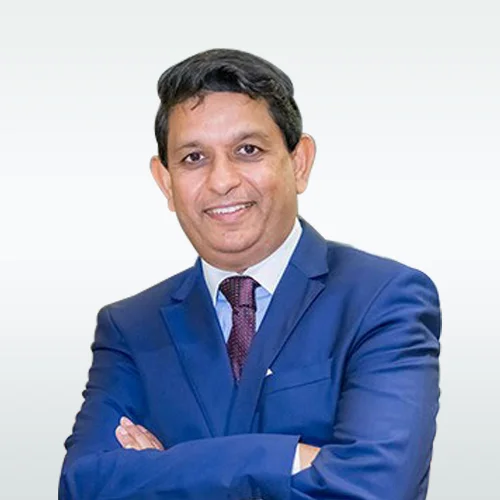
Dr. Sandeep Jain
Director / Registered Dentist
BDS (Delhi), MDS (Perio) (HK), AdvDipPeriodont (HK)
MRD RCSEd (Perio), MRACDS (Perio)
Speaks English, Hindi, Punjabi

Dental crowns are a versatile solution to repair and protect your teeth. Our experienced dentists recommend dental crowns for several reasons:
At Bayside Dental Discovery Bay, our dental crowns are metal-free, made from high-quality zirconia and tooth-coloured ceramic. These materials blend seamlessly with your natural teeth, so the restoration is hard to spot.
Looking for faster service? Visit our Smith & Jain clinic in Central for same-day dental crowns. With advanced equipment, you can walk in during the morning and leave with a perfectly fitted crown by the afternoon.
To prepare for a dental crown, we gently reduce the size of the affected tooth so the crown fits snugly. Impressions are taken, and your custom crown is crafted to match your smile. The process typically takes 2–3 visits, but the result is a durable, natural-looking tooth that lasts for years.
Missing one or more teeth? A dental bridge is an ideal way to “bridge” the gap in your smile. Our dentists recommend dental bridges to:
The most popular option is a traditional dental bridge, featuring a false tooth (or teeth) anchored by dental crowns cemented onto neighbouring abutment teeth. This reliable design ensures stability and a natural appearance.
Before fitting a dental bridge, we prep the supporting teeth by reducing their size. This allows the bridge to sit comfortably and securely. After taking impressions, your custom bridge is usually ready in about 1–2 weeks and is then permanently cemented in place.
A dental bridge fills the gap left by one or more missing teeth. There are four main designs, and the difference is what holds the false tooth in place. Which one fits depends on where the gap is, how healthy the neighbouring teeth are, and how much biting force that part of the mouth takes.
| Type | What it is | Often used when |
|---|---|---|
| Traditional bridge | A false tooth held by crowns on the teeth either side of the gap. Those teeth are shaped so the crowns can fit over them. | There are sound teeth on both sides of the gap, especially if they already need crowns. |
| Cantilever bridge | A false tooth supported by a crown on one neighbouring tooth only. | There is a suitable tooth on just one side of the gap. That single tooth carries the load, so your dentist checks it is strong enough first. |
| Maryland bridge (resin-bonded bridge) | A false tooth bonded to the back surfaces of the neighbouring teeth, so those teeth need less shaping. | A front tooth is missing and bite forces are lower. It is sometimes used as a temporary option for younger patients until jaw growth has finished. |
| Implant-supported bridge | A bridge fixed to dental implants instead of natural teeth. | Several teeth in a row are missing and you would rather not have healthy neighbouring teeth shaped. Implant surgery and a healing period come first. |
Traditional, cantilever and Maryland bridges all rely on your natural teeth; an implant-supported bridge does not. At your consultation, your dentist will look at the gap and the teeth around it and advise which type suits you. You can read more about dental implants if they may be an option.
Whether you need a dental crown to save a tooth or a dental bridge to fill a gap, Bayside Dental Discovery Bay offers expert care tailored to you.
The Prince Philip Dental Hospital private patient fee schedule prices crowns, bridges, inlays and veneers per unit, at HK$7,700–$12,000. That range excludes outsourced dental laboratory work and special materials. A crown is charged per tooth, and a bridge by the number of units it spans. The main factors are:
| Factor | How it affects the fee |
|---|---|
| Units in a bridge | A bridge is made of crowns on the neighbouring tooth or teeth plus the replacement tooth between them, and each unit is charged. Replacing one missing tooth with support on both sides usually means three units. |
| Material | Crowns can be made in porcelain fused to metal, all-ceramic or zirconia. Each differs in strength, appearance and production cost. Special materials are not included in the reference range. |
| Tooth position | A front tooth is on show, so colour and shape matching take more work. A back tooth takes heavier biting forces and needs a stronger material. Both affect how the crown is made and what it costs. |
| Treatment before the crown | If the tooth first needs root canal treatment (reference range HK$6,600–$25,000 per tooth) or needs to be built back up first, that is charged separately. |
| Dental laboratory work | Crowns and bridges are custom-made by a dental laboratory. Outsourced lab fees are not included in the reference range. |
These ranges are taken from the Prince Philip Dental Hospital private patient fee schedule and are for reference only. They are not Bayside Dental Discovery Bay’s fees, and they are not a quote. The examination is charged separately (reference range HK$600–$2,500). Your dentist will confirm the fee after a clinical assessment. Fees for other treatments are on our Hong Kong dental fee reference page.
Typically around 10–15 years, and often longer with good care, though no crown is guaranteed for life. Common reasons for replacement are new decay at the crown’s edge, gum recession exposing the margin, and wear or chipping over time. The crown itself can’t decay, but the tooth underneath can, so brush twice a day, floss, and keep up regular check-ups and teeth cleaning.
Zirconia is very strong and unlikely to chip in everyday use, but biting ice or bones, or grinding at night, can still damage it; if you grind, your dentist may suggest a night guard. The material resists staining, but it also won’t lighten with whitening, so if you’re planning teeth whitening, do it first and have the crown matched to your new shade.
Zirconia is very strong, which suits back teeth and people who grind. All-ceramic crowns, such as lithium disilicate, let light through much like natural enamel, so they’re often used on front teeth. Porcelain-fused-to-metal crowns have a metal core: durable, but less natural-looking. All our crowns are made without metal, from zirconia or tooth-coloured ceramic, and your dentist will recommend a material based on the tooth’s position, your bite and how it needs to look.
Not necessarily a crown. If the cavity is small and enough healthy tooth remains, a filling is usually enough. Your dentist will suggest a crown when decay is too large for a filling to hold, the tooth is cracked, or it’s badly worn from grinding. Back teeth that have had root canal treatment are more brittle, so a crown or similar cusp-covering restoration is usually recommended to protect them.
It shouldn’t be painful. The tooth is numbed with local anaesthetic before it’s shaped, and most people feel only light pressure or vibration. For 1–3 days after the crown is fitted, the tooth may be slightly sensitive to hot, cold or biting, which usually settles on its own. Contact the clinic if the pain lasts more than three days, keeps you awake, or hurts when you bite.
Each suits different situations. A bridge needs no surgery and is quicker to complete, but the teeth on either side must be trimmed to hold it, it usually needs replacing after about 10–15 years, and the bone under the gap can still shrink. A dental implant leaves neighbouring teeth untouched and helps preserve the jawbone, but involves minor surgery and a few months of healing. If the neighbouring teeth already need crowns, a bridge may make sense; your dentist will advise based on your bone, gums and adjacent teeth.
Based on the Prince Philip Dental Hospital (PPDH) private patient fee schedule, a crown, bridge, inlay or veneer is about HK$7,700–$12,000 per unit, and a bridge is charged by the number of units involved; these ranges exclude outsourced dental laboratory work and special materials. The actual cost depends on the material, your tooth and how many units you need. For reference only; this is not our clinic’s actual pricing, and your fee is confirmed after an examination. See the full fee reference.
Director / Registered Dentist
BDS (Delhi), MDS (Perio) (HK), AdvDipPeriodont (HK)
MRD RCSEd (Perio), MRACDS (Perio)
Speaks English, Hindi, Punjabi
Cracked or missing teeth? Your dentist will examine your teeth first, then discuss whether a crown or bridge is suitable. Both clinics are in Discovery Bay — choose the one closest to you: