Kids Dentistry

Kids dentistry (paediatric dentistry) cares for growing teeth from a toddler’s first tooth through adolescence: routine check-ups, decay prevention (fluoride, fissure sealants), treatment of cavities in baby teeth, habit guidance, and children’s orthodontics. Bayside Dental Discovery Bay runs two clinics in Discovery Bay, Lantau (North Plaza and Main Plaza), so families across Discovery Bay and Lantau can bring their children close to home.

Kids Dentistry 兒童牙科
Table of Contents

Your Child’s First Dental Check-Up

We recommend a toddler’s first dental check-up at around age 2 to 2½. Before that, bringing your child along to your own appointment helps them get used to the setting.

At the first visit, our dentists usually:

  • check baby teeth for decay or other problems;
  • teach brushing in a fun, kid-friendly way;
  • give dietary tips for healthy teeth.

Starting early builds a “dental home,” so problems are caught before they grow and your child comes to treat dental visits as routine rather than something to fear. After that, a check-up roughly every 6 months keeps growth on track.

Kids Dentistry 兒童牙科

Making Kids Comfortable with Dentistry

It’s common for children to feel nervous about the dentist. We explain each step in simple language and stay gentle and patient, from the waiting area to the chair, turning an unfamiliar place into a small adventure.

For more anxious children, we can offer relative analgesia (nitrous oxide, “laughing gas”) mixed with oxygen. This is a mild sedation that helps them relax while staying awake.

Parents’ Common Questions: From First Tooth to Age 7

The questions parents ask us most, grouped by your child’s age, each with a picture.

Ages 0–3: From the First Tooth

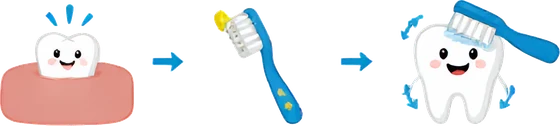
Brushing with a soft child-sized toothbrush from the first tooth

When should we start brushing, and which toothbrush is best?

Start as soon as the first baby tooth comes through. Use a child-sized, soft-bristled toothbrush and gently clean every surface.

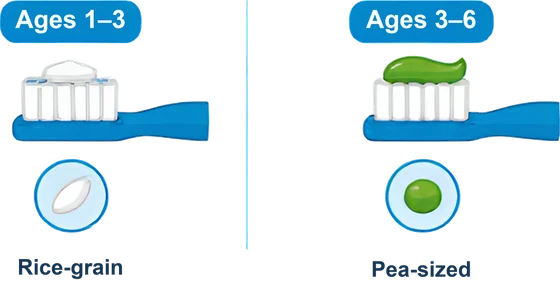
Rice-grain amount of fluoride toothpaste for ages 1–3, pea-sized for ages 3–6

Is fluoride toothpaste safe for toddlers, and how much should I use?

Yes. It’s safe and recommended for preventing decay. Use a rice-grain amount for ages 1 to 3 and a pea-sized amount for ages 3 to 6, and teach your child to spit out the excess.

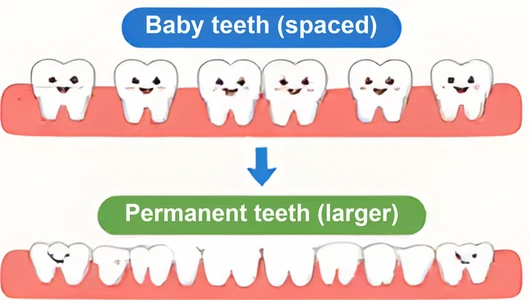
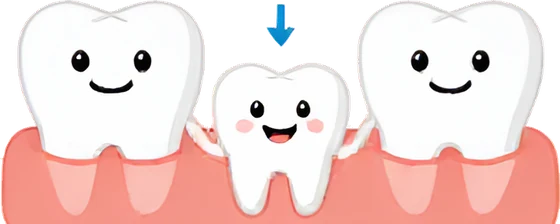
Gaps between baby teeth make room for larger adult teeth

My toddler has big gaps between their baby teeth. Is that a problem?

No. Gaps between baby teeth are normal and helpful: they make room for the larger adult teeth that come later.

Ages 3–6: Habits and Diet

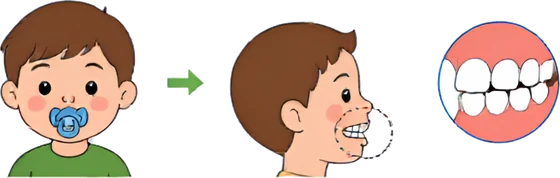
A dummy habit can affect how teeth line up

When should my child stop thumb-sucking or using a dummy?

Most children stop on their own between ages 2 and 4. If the habit carries on past 4, it can affect jaw growth and tooth alignment, such as front teeth that stick out, so it’s best to step in before then.

Sugar from gummies turns to acid and raises the risk of decay

Are sticky gummy vitamins or fruit juice really bad for teeth?

Yes. They cling to teeth for a long time; bacteria feed on the sugar and produce acid, which raises the risk of tooth decay.

Baby teeth hold space for adult teeth

Why do baby teeth matter if they fall out anyway?

They help children chew and speak, and they hold space for the adult teeth. Losing them too early can lead to crowded or crooked adult teeth.

Age 6 and Up: New Teeth and Orthodontics

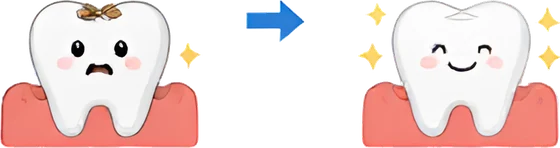
A back tooth before and after a fissure sealant

What are fissure sealants, and does my child need them?

A protective coating placed in the deep grooves of the back teeth to stop food getting trapped and decay starting. They’re usually recommended when the first adult molars come through, around age 6.

Shark teeth: an adult tooth coming in behind a baby tooth

My child’s adult tooth is coming in behind a baby tooth. Is that normal?

Yes, it’s common, and often called “shark teeth” because of the double row. The adult tooth usually moves into place by itself; if the baby tooth doesn’t fall out, ask your dentist whether it needs to be removed.

First orthodontic check by age 7

Will my child need braces, and when is the first orthodontic check?

The American Association of Orthodontists recommends a first orthodontic check by age 7, when jaw growth can be monitored and problems spotted early.

Information provided by the dentists at Bayside Dental Discovery Bay

Orthodontics for Kids

Not every child needs braces, but an early assessment makes the most of a growing jaw. Bite problems often become clearer between ages 8 and 12; where a dentist judges it useful, we refer to an orthodontic specialist who explains the options. Some cases suit functional appliances that guide jaw growth. The actual plan and timing depend on the individual case and follow a clinical assessment.

Why Choose Kids Dentistry at Bayside Dental?

  • 👶 Close to home in Discovery Bay, Lantau: two clinics (North Plaza and Main Plaza), so there’s no long trip into town with young children.
  • 😊 Child-centred: a team trained in paediatric dentistry that values trust, education and a positive experience.
  • 🦷 One roof: from check-ups and prevention to baby-tooth treatment and referral for orthodontics when needed.
  • 💬 Multilingual team: our dentists speak English, Cantonese, Mandarin and other languages.

Meet the Dentists Who Care for Your Child

Dr. Selina Chhabra Rampal 牙醫

Dr. Selina Chhabra Rampal

Specialist in Paediatric Dentistry
FCDSHK (Paed Dent), FHKAM (Dental Surgery)
BDS (Rajiv Gandhi University of Health Sciences, India), MDS (Paed Dent) (HK)
MPaed Dent RCSEd, MPaed Dent RCS (Eng)
Speaks English, Hindi

Read More »

Kids Dentistry Services & Fees

Children’s teeth have different needs from adults’, with the emphasis on preventing problems early:

  • Check-ups and oral-hygiene coaching: our dentists and registered dental hygienists show age-appropriate brushing and flossing.
  • Fluoride varnish: strengthens enamel and lowers decay risk.
  • Fissure sealants: a protective resin over the deep grooves of back teeth, sealing out food and bacteria. A common preventive step for children.
  • Treating cavities in baby teeth: baby teeth still need care. Left untreated, decay can cause pain and affect the development and alignment of adult teeth (see Guide to Cavities in Baby Teeth).
  • Habit guidance: for example, help with prolonged thumb-sucking that can affect alignment.
  • Growth monitoring: tracking teeth and jaw development from baby teeth to the teen years.

Kids dentistry fee reference

Your child’s needs can only be assessed accurately in person, so we can’t quote a fixed fee before a consultation. The ranges below are general Hong Kong market references from the Prince Philip Dental Hospital (PPDH) published fee schedule, for reference only; actual fees follow an examination and consultation:

ItemReference range (HK$)
Examination / consultation$600 – $2,500
Cleaning$500 – $1,500
Baby-tooth filling (composite)$600 – $1,500
Fissure sealant (per tooth)$500 – $800
Fluoride varnish$500 – $700

Children’s orthodontics is highly case-dependent (appliances used, treatment length) and needs a clinical assessment, so there’s no fixed price; a dentist can advise and refer. More group fee references: Dental Fee Reference.

Frequently Asked Questions

At what age should my child first see a dentist?

Around age 2 to 2½ for a first check-up; bringing them along to your own visits earlier helps them settle in. After that, a check-up about every 6 months.

Does my child really need a "kids dentist"? How is it different from general dentistry?

Kids dentistry focuses on the needs of growing teeth: baby-tooth care, prevention (fluoride, sealants), habit guidance and growth monitoring, all communicated in a child-friendly way. We also work with orthodontic and oral-health-education support across a child’s stages.

Do cavities in baby teeth need treating if they'll fall out anyway?

Yes. Baby teeth are used until roughly age 6–12 or longer; untreated decay can cause pain, affect eating, and disturb the development and alignment of adult teeth. See Guide to Cavities in Baby Teeth.

What is a fissure sealant, and what does it do?

A protective resin painted into the deep grooves on the chewing surfaces of back teeth, sealing out food and bacteria to reduce decay. It’s a common preventive measure and needs no drilling.

How often should my child have their teeth cleaned?

A check-up about every 6 months is a common guide, with a dentist or registered dental hygienist advising whether cleaning and fluoride care are needed; the actual frequency depends on your child’s oral health.

Is there government support for children's teeth (ages 6–12)?

Hong Kong’s Department of Health runs a School Dental Care Service covering registered local aided primary-school students (P1–P6) for basic care; children at international schools are generally not included. Individual treatments and private-clinic scope also differ, and details follow the Department of Health. Many Discovery Bay families whose children attend international schools opt for private kids dentistry, which we tailor to your child’s needs.

My child is scared of the dentist. What can help?

We explain each step simply and stay gentle; for more anxious children we can offer nitrous oxide (laughing gas) sedation to help them relax.

When should orthodontics be considered for a child?

Bite problems often show between ages 8 and 12, and some cases can be assessed early; where useful, a dentist refers to an orthodontic specialist. The plan follows a clinical assessment.

Where can my child see a dentist in Discovery Bay / Lantau, and how do I choose a paediatric dentist?

Bayside Dental Discovery Bay has two clinics in Discovery Bay, Lantau (North Plaza and Main Plaza), so families across Discovery Bay and Lantau can visit close to home. When choosing a paediatric (children’s) dentist, look for: (1) care for growing teeth from baby teeth to the teen years; (2) prevention such as fluoride and fissure sealants; (3) child-friendly communication that eases fear; (4) referral to an orthodontic specialist when needed; (5) a convenient location for regular check-ups.

How much does children's orthodontics cost?

On the Prince Philip Dental Hospital fee schedule, an orthodontic treatment plan is about HK$2,000–3,000, fixed braces about HK$35,000–50,000 per arch, and a retainer visit about HK$1,500–2,500 after treatment; early orthodontic appliances for children aren’t listed separately. These figures are for reference only and are not our clinic’s actual fees; your fee is confirmed after examination. A dentist first checks whether and when treatment is needed and refers to an orthodontic specialist if it is. See our Dental Fee Reference.

Do fissure sealants or fillings hurt?

A fissure sealant is a resin painted onto the tooth with no drilling, so it’s generally painless. A baby-tooth filling, if needed, is done with local anaesthesia to keep your child comfortable, and we explain each step in a way children understand.

Book Your Child’s Dental Visit

Book a dental check-up for your child at Bayside Dental Discovery Bay. Both clinics are in Discovery Bay — choose the one closest to you:

North Plaza Clinic
Unit 1, G/F, Office Block 1, DB North Plaza
Main Plaza Clinic
Shop 109B, 1/F, Wing B, DB Plaza

Menu