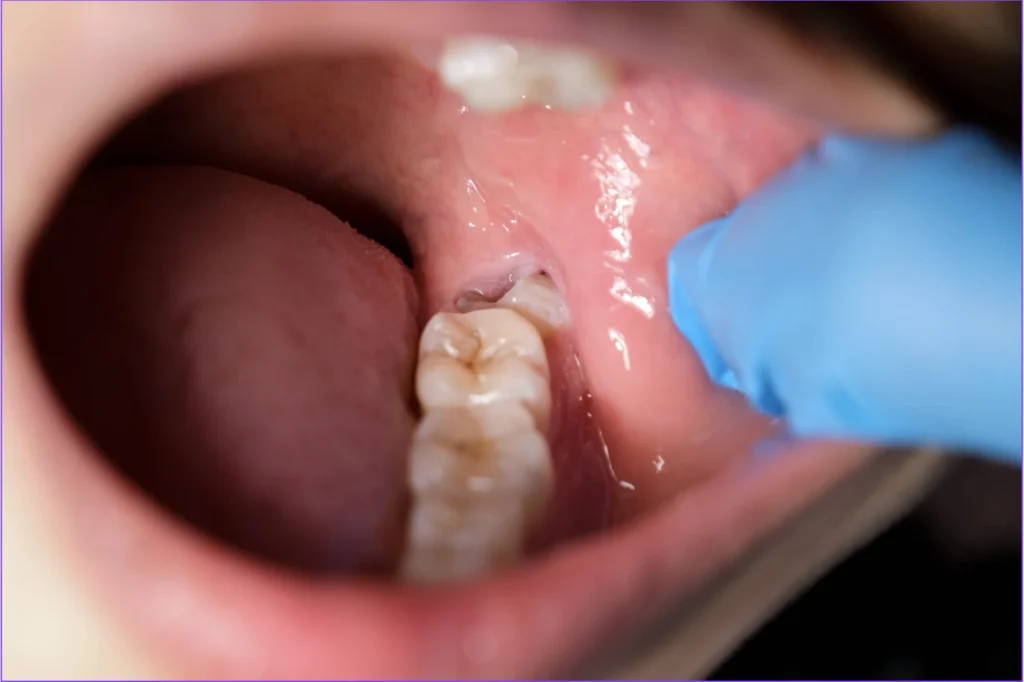
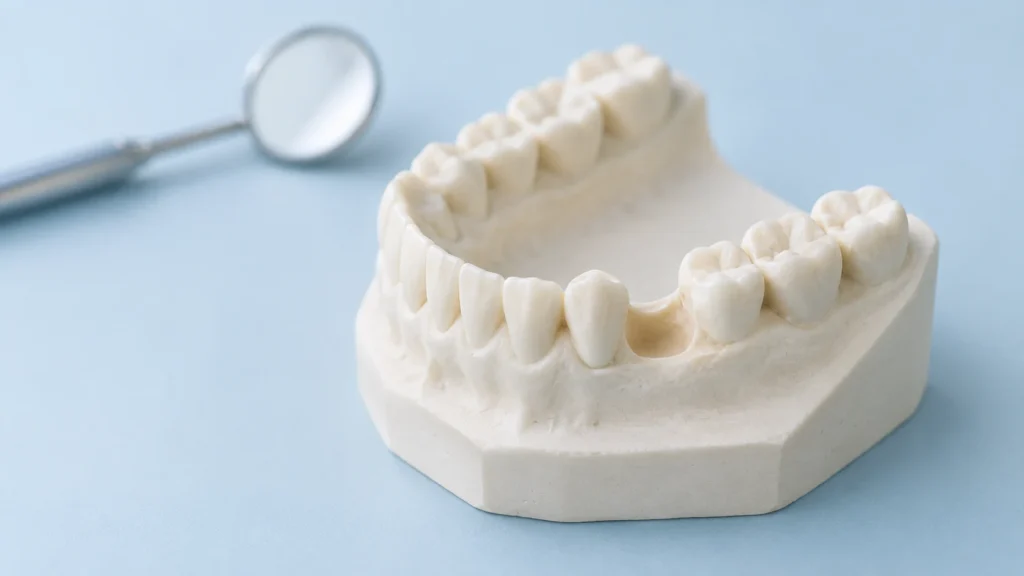
To replace one missing permanent tooth, you can consider an implant, a fixed bridge or a removable partial denture. They differ in how they are supported, whether they need surgery or changes to neighbouring teeth, and how you clean them. Your dentist checks your bite, the teeth beside the gap, your gums and jawbone before advising what suits you and when to start.
What are the options for replacing one missing tooth?
| What to compare | Single tooth implant | Fixed dental bridge | Removable partial denture |
|---|---|---|---|
| What supports the replacement? | An implant in the jawbone supports a crown | One or more neighbouring teeth, depending on the design | A removable base, which may use remaining teeth for support or retention |
| Can you take it out yourself? | No | No | Yes |
| Does it involve surgery or changes to neighbouring teeth? | Requires implant surgery. The neighbouring teeth generally do not need reshaping to support the crown | A conventional bridge usually requires reshaping the supporting teeth. A resin-bonded bridge generally needs less preparation | Usually fitted without implant surgery. The dentist checks whether the design requires adjustments to supporting teeth |
| How is treatment arranged? | The implant usually needs time to integrate before the crown is fitted | The dentist prepares the supporting teeth as needed, then tries in and fits the finished bridge | The denture is made, tried in and adjusted. It can also be used while you wait for another restoration |
| How do you clean it? | Clean around the gumline and between the teeth | Clean under the replacement tooth as well as brushing | Remove and clean the denture, and brush the remaining teeth |
How do an implant, a bridge and a partial denture differ?
Single tooth implant
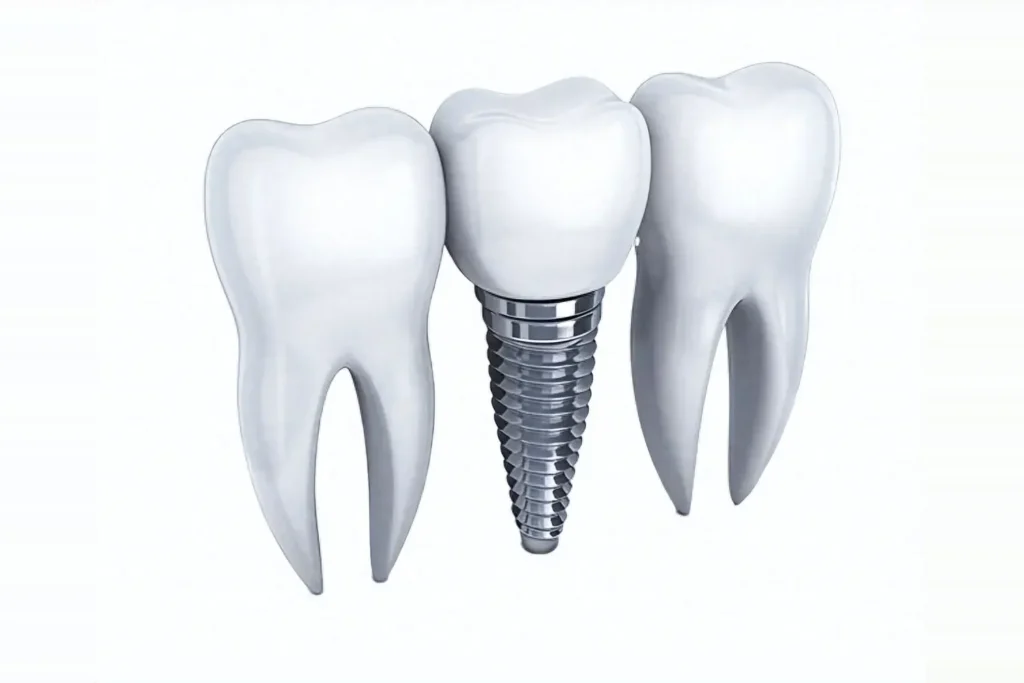
The dentist places an implant in the jawbone. Once it has integrated with the bone, it can support a crown. An implant may be worth discussing if the teeth beside the gap are intact and you would like a fixed replacement. Gum health, the amount of bone, your medical history and healing all affect suitability. If you have active gum disease, your dentist will usually address it first. Allow time for healing, with the schedule agreed after an examination. Read about dental implant assessment and treatment
Fixed dental bridge
A fixed bridge uses neighbouring teeth to hold a replacement tooth in the gap. If a neighbouring tooth already has a large filling, your dentist can assess whether it needs a crown and whether it could support a bridge. A conventional bridge usually requires reshaping the supporting teeth. A resin-bonded bridge may be suitable for some single gaps, including certain front tooth gaps where the bite allows it. Ask your dentist to show you how to clean underneath the bridge. See the types of crowns and bridges
Removable partial denture
A removable partial denture can replace one tooth or several. You take it out to clean it. It can be used while you wait for another restoration or as a longer-term option, depending on the design and the condition of your mouth. It can take time to get used to wearing it. If it rubs or feels loose, ask your dentist to check the fit. Read about removable dentures
What will your dentist check before recommending an option?
- The gap and your bite. A missing front tooth may affect appearance or speech. At the back of the mouth, the dentist will consider how much force the replacement will take when you chew. They can also check whether the teeth beside or opposite the gap have shifted.
- Neighbouring teeth, gums and bone. An intact tooth and a heavily filled tooth may lead to different discussions about a bridge. If you are considering an implant, the dentist will also assess the jawbone and factors that could affect healing.
- What you can manage day to day. Ask to see how you would clean under a bridge, around an implant or around any parts that hold a denture in place. Tell your dentist if you prefer a fixed option, want to avoid surgery or would like to discuss a removable replacement.
Can you wait after an extraction?
If a permanent tooth has just been knocked out in an accident, contact a dentist immediately.
For a planned extraction, you can discuss replacement before or after the tooth is removed. The timing depends on the healing of the site, the condition of the gum and bone and the option you are considering. In some cases, monitoring the gap or wearing a temporary denture while you wait can be considered. If the gap has been there for some time, a dentist can check the space and your bite before advising what is still possible.
What should you ask at your consultation?
- Which options suit this gap, and what would each mean for the neighbouring teeth?
- What are the steps and how many visits might I need? Could I use a temporary replacement while I wait?
- How would I clean it? What should I do if the denture becomes loose or the gum feels sore?
- What does the estimate cover, and which checks, procedures or adjustments might be charged separately?
Our dental fee reference explains what some treatment charges cover. Your actual fee is confirmed after an examination and consultation.
Frequently asked questions about single tooth replacement
Do I need an implant to replace one missing tooth?
A bridge or a removable partial denture may also be suitable. Your dentist will assess the gap, gums, jawbone and neighbouring teeth. In some cases, monitoring the space may be an option.
Does a fixed bridge always mean reshaping the neighbouring teeth?
A conventional bridge usually requires reshaping the teeth that support it. A resin-bonded bridge generally requires less preparation and may suit some single gaps. The position of the gap, the supporting teeth and your bite all matter.
Can a partial denture replace just one tooth?
Yes. A partial denture can replace one tooth and can also be used while you wait for another restoration. The dentist designs it around the gap and the remaining teeth.
Can I leave a gap under review for a while?
This can be appropriate in some cases. Your dentist can check the space, your bite and any movement of nearby teeth, then discuss whether monitoring is suitable and when to review it.
How do I clean the three types of replacement?
With an implant, clean the gumline around the crown and between the teeth. With a fixed bridge, clean under the replacement tooth as well. Take a partial denture out to clean it and brush the remaining teeth. A dentist or registered dental hygienist can demonstrate the tools and techniques that suit your mouth.
To discuss replacing a single missing tooth, you can book at North Plaza or Main Plaza.