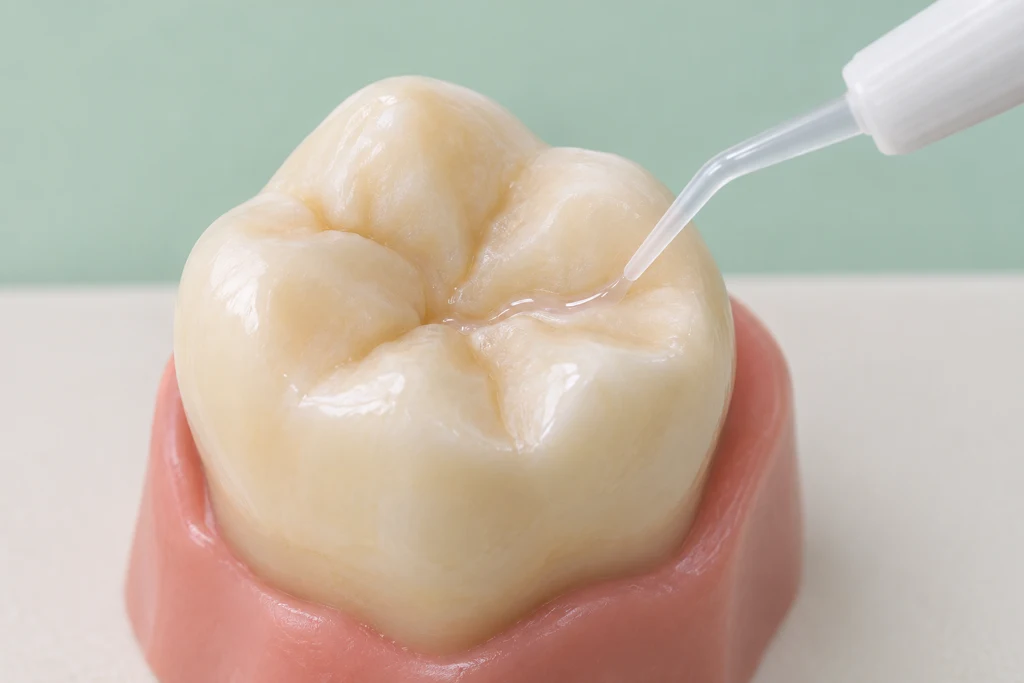
Image: illustration, not a clinical image.
Fissure sealants cover deep grooves on the chewing surfaces of back teeth to help reduce decay risk. Whether a child needs them depends on tooth eruption, groove shape and individual risk, rather than age alone. Sealants serve a different purpose from fillings and do not replace brushing, cleaning between teeth or dental checks.
Why do the grooves in back teeth matter?
Some molars have narrow grooves that are difficult to keep clean. A sealant covers suitable grooves, creating a barrier that helps keep food and plaque from collecting there.
A dark line in a groove is not enough to establish whether there is staining, an early change or a cavity. A dentist needs to assess the surface before deciding whether prevention, monitoring or restorative treatment is appropriate.
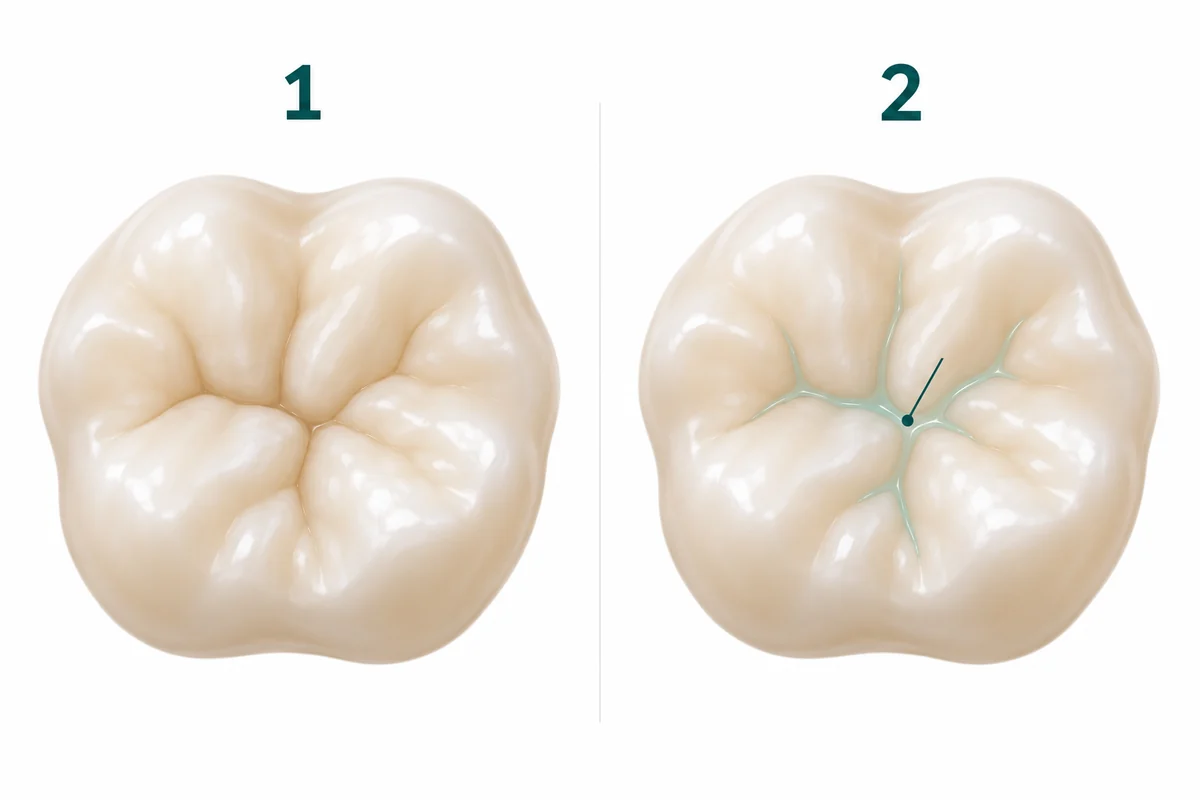
- Natural grooves
- Sealant location
1 Natural grooves on the chewing surface; 2 teal highlights the sealant location within the grooves, not a covering over the whole tooth. Colour is illustrative. This is not a decay-treatment before-and-after image or protection of every tooth surface.
When should a child be assessed?
Newly erupted permanent molars are common candidates for assessment. You do not need to wait until every baby tooth has fallen out before asking about them. A new back tooth may be permanent even while baby teeth are still present.
The decision also depends on whether the chewing surface can be kept dry during placement, the child’s decay history and the condition of each tooth. Some baby molars may be considered in children at higher risk. A birthday alone does not establish that every tooth should be sealed.
Sealants, fluoride and fillings: different purposes
| Approach | Main purpose | What parents should know |
|---|---|---|
| Fissure sealants | Protect suitable grooves on chewing surfaces | The seal needs checking for wear or loss |
| Fluoride care | Help tooth surfaces resist acid damage | Its role differs from physically covering a groove |
| A filling | Restore damaged tooth structure that needs repair | Examination determines whether a filling is necessary |
These are not always mutually exclusive choices. Different surfaces may need different care. Some early changes without a cavity can be managed preventively or monitored, but parents should not decide this from colour alone.
If your child already has decay, our guide to cavities in baby teeth explains treatment options. This article focuses on prevention in the grooves of teeth.
What happens during placement?
After assessment, the tooth is cleaned, prepared and dried. Sealant is applied to the appropriate grooves and set, usually with a curing light. The dentist checks the seal and the bite.
Straightforward sealing does not usually involve removing decayed tissue as a filling would. If examination identifies a cavity or another problem, the plan may change. Ask whether the proposed appointment is for preventive sealing, restoration or further assessment.
Caring for sealed teeth
Continue brushing with fluoride toothpaste, with parental help appropriate to your child’s ability. Clean between teeth as advised and reduce frequent sugary snacks and drinks. Sealants do not cover every tooth surface.
Attend reviews at the interval advised by the dentist. Sealants can last for years, but can also wear or come away. If you notice a missing area, sensitivity or a change in the bite, ask the practice to check it rather than trying to add material yourself.
Questions to ask when booking in Discovery Bay
Bayside Dental Discovery Bay provides preventive assessment through its children’s dentistry service. Tell the practice if your child has newly erupted molars, previous decay or symptoms.
Ask which teeth need protection, whether decay is already present and how the proposed fee is calculated. Check whether the examination, imaging, reviews and future repairs are separate items. Your dentist can provide an individual estimate after assessment.
For a separate question about tooth alignment, read the parent’s guide to orthodontic assessment. Sealants are for decay prevention, rather than straightening teeth.
What should parents prepare for a first sealant appointment?
Tell your child that the dentist will look at the back teeth and explain whether their grooves would benefit from protection. Share previous decay or restoration records and mention recent pain, sensitivity or trapped food. Let the clinic know if keeping the mouth open or keeping the tooth dry may be difficult so the dentist can assess the arrangements.
Applying sealant usually takes only a few minutes per tooth. The whole visit may also include examination, discussion and other care, so this is not a promise about appointment length. Nor does every suitable tooth have to be treated at the same visit.
When can my child eat, and what if the sealant seems to have come off?
Before leaving, ask the team to confirm that the material has set and explain any individual eating or care instructions. Do not apply instructions for a different material or another child, or test the sealant by biting something hard.
Contact the clinic if the bite feels different, you notice a gap or suspect material has come off. Explain when you noticed it and whether there is sensitivity or pain. The dentist can assess the seal, check for decay and decide whether material needs adding or replacing. Looking at the tooth at home cannot confirm that every groove remains protected, even if there is no discomfort.
Reviews depend on decay risk and the condition of the sealant. Sealants can last for years but can wear, so a fixed lifespan should not be treated as a deadline that applies to every child.
What should a sealant estimate include?
Ask whether the price is per tooth, per surface or per visit. Check whether examination, imaging, reviews and later repair are included or charged separately. If fluoride treatment or a filling is also suggested, ask for its purpose and price to be listed separately rather than combining different treatments into one unclear item.
The tooth surfaces that need treatment must be assessed individually. A reference price can help you plan, but a personal estimate needs confirmation by the clinic after examination.
What if I see the term 窩溝封填?
Chinese-language information may use 窩溝封填 or 窩溝封閉 when discussing fissure sealants. When booking, explain that you want advice about protecting grooves in the back teeth. Ask the team to confirm the actual treatment proposed; a sealant assessment is different from assuming that an existing cavity needs filling.
Frequently Asked Questions About Fissure Sealants
Are fissure sealants the same as fillings?
No. Sealants mainly protect suitable grooves, while fillings restore damaged tooth structure that needs repair. A dentist checks the surface before recommending either approach, monitoring or another form of care.
At what age can a child have fissure sealants?
Eruption, groove shape and decay risk matter more than a fixed age. Newly erupted permanent molars are common candidates, and some baby teeth may also be considered. Ask about the specific teeth rather than age alone.
Can a sealed tooth still get a cavity?
Yes. A sealant does not cover every surface or remove the need for daily cleaning. It also needs checking for wear. Continue fluoride toothpaste, appropriate cleaning between teeth and dental reviews.
What if a fissure sealant falls out?
Contact the practice for a check. The dentist can assess the seal, tooth surface and any decay before deciding whether to repair or replace it. Loss of material does not mean immediate decay, but should not be ignored.
How long does a sealant appointment take?
Applying material usually takes a few minutes per tooth. Examination, discussion and any other care add to the visit, so confirm the expected appointment length with the clinic.
When should a sealant be reviewed?
The interval depends on individual decay risk and the material's condition. Regular dental checks should include the sealants; contact the clinic sooner if material appears missing or symptoms develop.
Does the price include future repairs?
Do not assume so from the treatment name. Ask how the price is calculated and whether examination, reviews and additional material are included.
Does 窩溝封填 mean a filling for a cavity?
Do not infer a cavity from the term alone. Explain that you are asking about fissure sealants and let the dentist confirm the tooth's condition and the proposed treatment.
Families can ask about appointments at the North Plaza or Main Plaza practice and confirm the location when booking. This article does not replace an individual dental assessment.