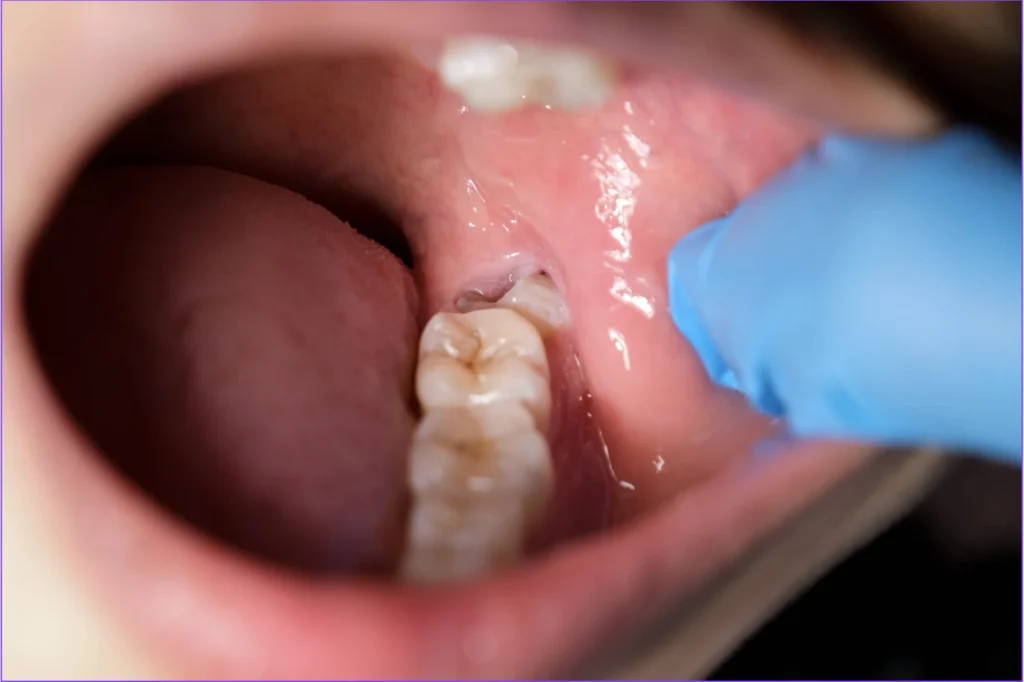

Wisdom tooth pain is not necessarily caused by the tooth coming through. The gum around a partly erupted tooth may become inflamed, the wisdom tooth or its neighbour may develop decay, or trapped food may irritate the area. Treatment depends on the cause, so identifying where the pain comes from helps determine whether cleaning, dental treatment or a discussion about removal is appropriate.
The discomfort may feel like an ache at the back of the mouth, or it may be more noticeable when chewing. You might also notice redness or swelling in the nearby gum. Pain can be persistent or come and go. These details help a dentist understand your symptoms, but they cannot identify the cause on their own.
Possible Causes of Wisdom Tooth Pain: Clues to Notice
| What you may notice | Possible cause | What a dentist may assess |
|---|---|---|
| Red or swollen gum around a partly erupted tooth; discomfort when chewing | Inflammation around the crown, called pericoronitis | The inflamed area, cleaning difficulties and whether symptoms recur |
| A sharp sensation with cold, hot or sweet foods | Decay or another problem in the wisdom tooth or a neighbouring tooth | Which tooth is affected, the extent of damage and treatment options |
| Food repeatedly trapping at the back with gum discomfort | Tooth position making the area difficult to clean | The position of the wisdom tooth and the condition of the nearby tooth and gum |
| Pain with pus, fever or facial swelling | A possible infection or abscess | The source of infection and how urgently it needs treatment |
These are clues, not a diagnosis. Symptoms can overlap, and early tooth decay may have no obvious symptoms.
Why Does a Wisdom Tooth Hurt?
Gum Inflammation Around a Partly Erupted Wisdom Tooth
When a wisdom tooth has only partly come through, some of its crown may remain covered by gum tissue. Food and bacteria can collect between the tooth and gum, making the area difficult to clean. The surrounding tissue may become inflamed; this is called pericoronitis. Redness, swelling, pain or discomfort when chewing can occur. Read more about gum inflammation and its possible causes.
If the gum is swollen, contact from the opposing tooth when you bite can also make the area more uncomfortable. Your dentist can check the affected tissue and look for other dental problems.
Decay in the Wisdom Tooth or a Neighbouring Tooth
Wisdom teeth sit at the back of the mouth and can be difficult to clean. If food and plaque remain around the area, decay can develop in the wisdom tooth or the tooth in front of it. A dental examination is needed to determine whether decay is responsible for the pain and what treatment may help.
For example, a brief sharp sensation with cold, hot or sweet food is useful information to share with your dentist. It may be associated with decay or another dental problem, but it cannot identify the affected tooth by itself. If the tooth in front is responsible, treatment will focus on that tooth's needs.
Tooth Position and Difficulty Cleaning
A wisdom tooth may grow at an angle or be unable to come through fully. Its position can create an area that is difficult to clean, where trapped food and inflammation may cause discomfort or affect the neighbouring tooth. An impacted or sideways tooth does not necessarily hurt, and its position alone does not decide whether it needs to be removed.
Other Possible Sources of Pain
Gum disease, infection or an abscess, and problems affecting nearby teeth can also cause pain at the back of the mouth. A dentist can examine the area rather than assuming that the wisdom tooth itself is responsible.
When Should You See a Dentist?
For pain and swelling around a wisdom tooth, contact a dentist promptly and seek a same-day dental assessment. Seek urgent dental assessment for severe pain that affects sleep or daily activities and is not relieved by painkillers, or for pus, a suspected abscess, fever, or swelling of the face or jaw.
Go to an emergency department immediately if you have difficulty breathing, speaking, swallowing or opening your mouth, marked swelling inside the mouth, eye swelling or pain, sudden changes in vision, or heavy bleeding from the mouth that will not stop.
How Does a Dentist Find the Cause?
Your dentist will ask about the pain and any accompanying symptoms, then examine the wisdom tooth, surrounding gums and nearby teeth. Depending on the findings, an X-ray may help assess the tooth's position and surrounding structures. Your dentist can then explain the findings and treatment options.
Tell your dentist when the pain started, whether it has returned before, and whether eating or biting makes it worse. These details help explain what you are experiencing, but symptoms alone cannot identify which tooth needs treatment.
How Is Wisdom Tooth Pain Treated?
While arranging an appointment, soft foods may be more comfortable, and you can avoid chewing on the painful side. Continue cleaning your mouth gently. If you are considering pain relief, ask a pharmacist or healthcare professional whether it is suitable for you and follow the instructions. These measures can ease discomfort temporarily but do not replace an examination.
Treatment depends on the cause and severity. A dentist may clean an inflamed area, treat decay or another affected tooth, or discuss removing the wisdom tooth when appropriate. Whether medicine or extraction is needed depends on the assessment; not everyone with wisdom tooth pain needs antibiotics or removal. Learn more about wisdom teeth assessment and removal.
If inflammation around a wisdom tooth keeps returning, your dentist may discuss the tooth's position, how easily it can be cleaned, the condition of the neighbouring tooth, and the benefits and risks of monitoring or removal. If the pain is coming from a neighbouring tooth, treatment will address the problem identified during the examination.
Cleaning can help address local build-up around an inflamed area. If a tooth has decay, the dentist will discuss treatment according to the extent of damage. When an infection is spreading or there are symptoms affecting general health, the dentist will assess whether medication and further treatment are needed. Pain relief can ease discomfort temporarily, but it cannot repair decay or address the source of an infection.
How Can You Care for the Area Around a Wisdom Tooth?
When brushing, pay attention to the back of the mouth and clean gently along the teeth and gumline. A dentist or registered dental hygienist can advise you on cleaning between your teeth for your individual situation. Regular dental checks can help identify problems that are difficult to see yourself. Tell your dentist if food often becomes trapped, cleaning is painful, or the gum repeatedly swells.
Frequently Asked Questions About Wisdom Teeth
Does a Painful Wisdom Tooth Always Need to Be Removed?
No. Your dentist will identify the cause of pain and consider the tooth’s position, surrounding tissues and treatment options before discussing whether removal is needed.
Can a Wisdom Tooth Have a Problem Without Hurting?
Yes. The absence of pain does not necessarily mean the tooth and surrounding tissues are healthy. A dentist can assess whether follow-up is needed.
Can Wisdom Tooth Pain Go Away on Its Own?
Discomfort may temporarily improve, but that does not necessarily mean its cause has gone away. A dental check can help identify the source, especially if symptoms return.
How Long Does Wisdom Tooth Pain Last?
There is no fixed duration: it depends on the cause and the individual. Arrange a dental check for pain or swelling; seek urgent dental assessment if symptoms are severe or getting worse.
How Can I Ease Wisdom Tooth Pain While Waiting for an Appointment?
Soft food, chewing on the other side and gentle cleaning may ease discomfort. If considering pain relief, ask a pharmacist or healthcare professional whether it is suitable and follow the instructions. These measures do not treat every cause; for pain and swelling around a wisdom tooth, contact a dentist promptly for same-day assessment.
Is Pain at the Back of the Mouth Always Caused by a Wisdom Tooth?
No. A neighbouring tooth, gum tissue or another oral problem may be responsible. An examination is needed to find the cause.