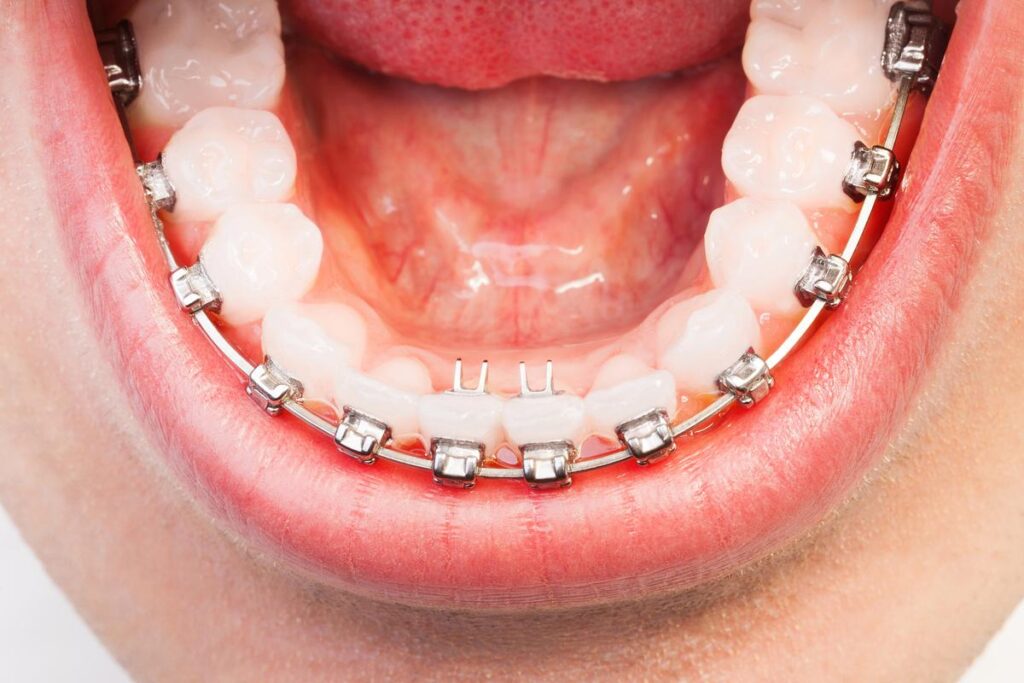
With the right routine, cleaning your teeth while wearing braces is more manageable than it looks. This guide covers eating with braces, how to clean around fixed braces and aligners, the discomfort to expect, and how fixed braces and clear aligners compare, so you can keep your teeth healthy throughout treatment.
Diet with Braces
- After each adjustment or in the early days, your teeth may feel sensitive. Adjusting your diet temporarily helps – but you don’t have to give up all your favourite foods.
✅ Recommended Foods
| Category | Examples | Reason |
| Soft Foods | Congee, noodles, steamed eggs, fish, tofu | Gentle on sensitive teeth |
| Fibre‑Rich Fruits & Vegetables | Banana, papaya, dragon fruit, chopped broccoli, cooked carrots | Help clean teeth naturally and stimulate saliva |
| Dairy Products | Milk, yoghurt, cheese | Rich in calcium for strong teeth |
❌ Foods to Limit or Avoid
| Category | Examples | Reason |
| Hard Foods | Nuts, bones, hard candy, ice | Risk of damaging brackets or wires |
| Sticky Foods | Gummy sweets, mochi, caramel | Tend to cling to braces, making cleaning teeth with braces harder |
| Staining Foods | Coffee, tea, red wine, curry | Can discolour elastic bands on fixed braces |
💡Health Tips:
- For the first 2–3 days after an adjustment, stick to soft foods. As your teeth adjust, you can gradually return to your normal diet.
- Rinsing and brushing after meals is the best way to maintain oral hygiene.

Cleaning Teeth with Braces: The Key to Preventing Cavities
- During orthodontic treatment, food debris and plaque easily accumulate around brackets and wires. If cleaning teeth with braces is not done properly, the risk of cavities increases significantly. Different types of braces require slightly different cleaning methods.
Fixed Braces (Metal / Ceramic) – Cleaning Tips
| Task | Recommended Method |
| Daily Brushing | Use the “45-Degree Bass Method” – angle your toothbrush toward the gumline, gently vibrate, and thoroughly clean around brackets and tooth surfaces. This is the core of cleaning teeth with braces. |
| Between Teeth | Use interdental brushes or floss to clean under wires and between teeth, ensuring no area is missed. |
| Auxiliary Tools | Consider a water flosser to flush out debris around brackets – it greatly improves cleaning teeth with braces efficiency. |
| Professional Care | Schedule a professional cleaning every 3–6 months to remove tartar and maintain gum health. |
Clear Aligners (e.g., Invisalign) – Cleaning Tips
| Task | Recommended Method |
| Aligners Cleaning | Gently brush aligners inside and out daily with a soft toothbrush and lukewarm water or mild soap. Never use hot water – it may warp the aligners. |
| Soaking | Use special cleaning tablets or diluted denture cleaner to remove bacteria and odours. |
| Teeth Cleaning | Brush and floss your teeth before putting your aligners back in, so food and plaque are not trapped against your teeth. |
| Professional Care | Schedule a professional cleaning every 3–6 months to remove tartar and maintain gum health. |
- 📚 Research Evidence: Professional Cleaning is Crucial
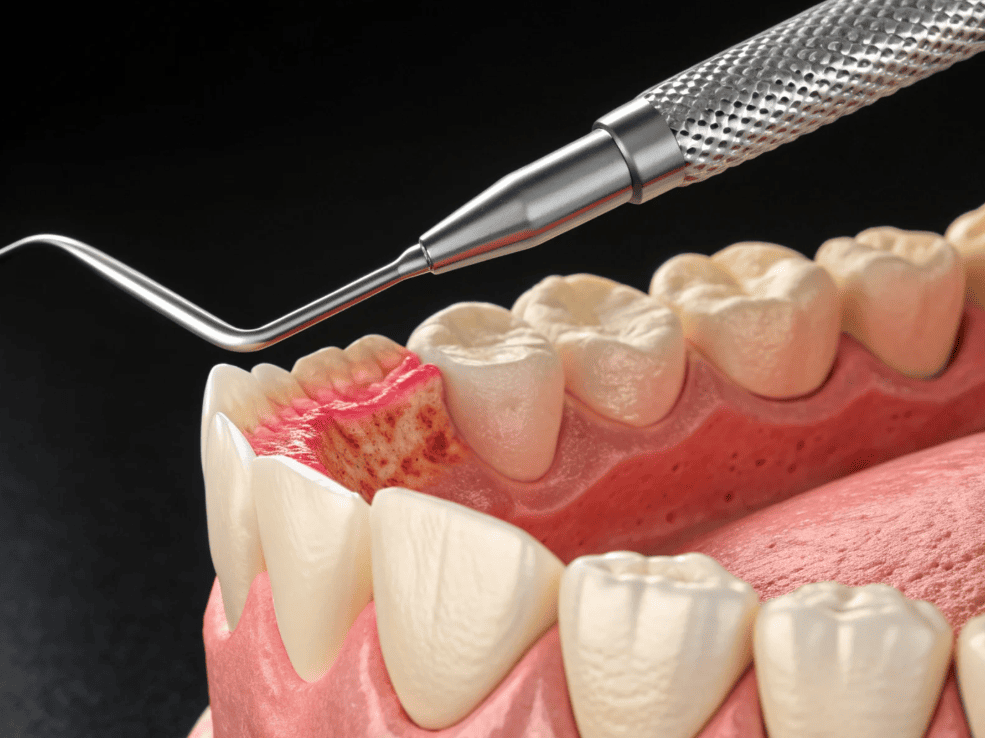
- A study in the Journal of Karnali Academy of Health Sciences found that professional dental cleaning (scaling) during orthodontic treatment improves gum health, reduces inflammation, and helps prevent “braces cavities.” Daily brushing and flossing alone aren’t enough – regular professional cleaning is essential.
- That’s why, alongside your daily routine, regular scaling is key. The team at Bayside Dental Discovery Bay provides professional oral care guidance and cleaning services – your trusted partner in a healthy smile.
- 💡 Health Tips:
- Carry a cleaning kit: After eating out, use a small toothbrush or floss to clean your teeth, preventing food debris from staying in your mouth for too long and helping maintain good oral hygiene during orthodontic treatment.
- Use fluoride toothpaste: Fluoride helps strengthen tooth enamel and prevent cavities, making it an essential part of keeping your teeth clean while wearing braces.
- Schedule regular check‑ups: Even with thorough daily cleaning, it’s important to visit your dentist regularly for professional evaluation of your teeth and braces.
Discomfort During Orthodontic Treatment
- Mild soreness or discomfort after getting braces or after each adjustment is completely normal. It means the braces are working, gradually moving your teeth into their ideal positions.
Common Discomforts and How to Manage Them
| Symptom | Cause | What to Do |
| Tooth soreness | Teeth responding to pressure | Eat soft foods and avoid hard items. Usually eases within 2–3 days. |
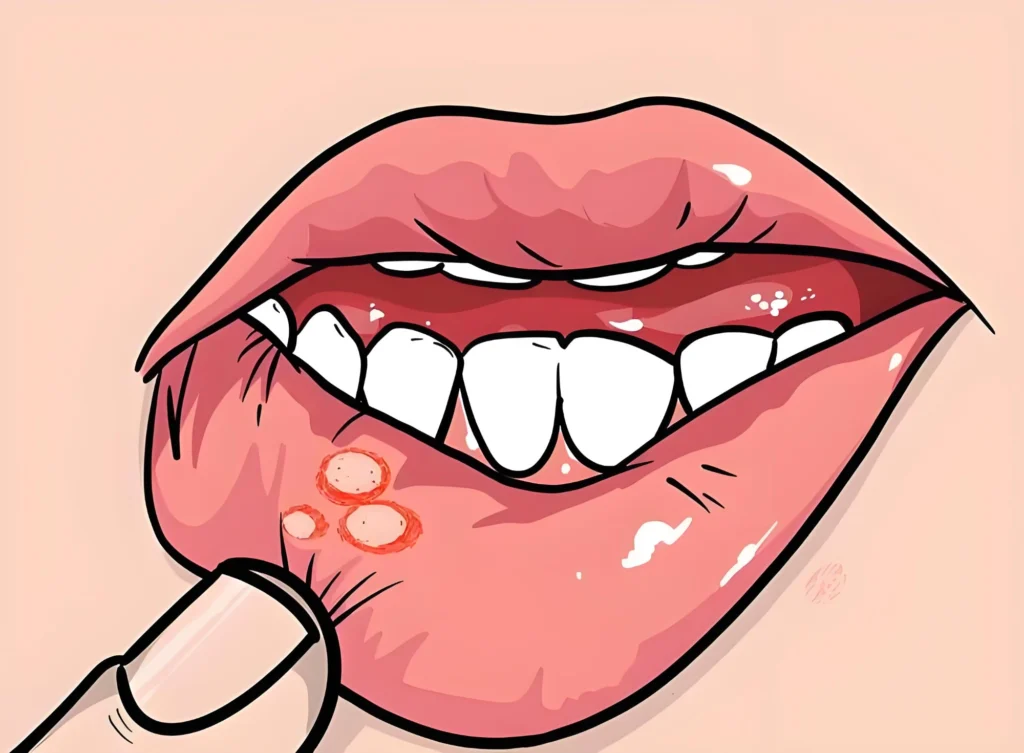
| Mouth irritation | Braces rubbing against oral mucosa | Apply orthodontic wax to the irritated bracket area to create a smooth protective layer. |
| Difficulty chewing | Temporary tooth sensitivity | Choose soft foods, cut food into small pieces, and chew slowly. |
- 💡 Health Tip: If discomfort lasts more than a week or you notice damage to your braces, contact your dentist as soon as possible. Bayside Dental Clinic offers emergency dental services to provide comprehensive care for your oral health.
Invisalign Clear Aligners: A More Convenient Choice
- After reading about the cleaning steps and dietary restrictions of fixed braces, you might wonder: “Is there a more convenient option?”
- In fact, clear aligners (such as Invisalign) were designed to solve exactly these problems.
Comprehensive Comparison: Clear Aligners vs. Fixed Braces (Metal/Ceramic)
| Feature | Clear Aligners (e.g., Invisalign) | Fixed Braces (Metal/Ceramic) |
| Diet | No restrictions; removable while eating | Need to avoid hard, sticky, or staining foods |
| Cleaning | Remove aligners, brush and floss normally | Requires interdental brushes and water flossers; more cleaning steps |
| Comfort | Smooth material, less likely to irritate | Metal wires may cause irritation; orthodontic wax can help |
| Sports | Can be removed during sports to avoid injury | Must be worn during sports; mouthguard recommended |
| Follow‑up frequency | Approximately every 6–8 weeks | Approximately every 4–6 weeks |
| Appearance | Transparent and custom‑fitted, nearly invisible | Metal brackets or ceramic brackets; more noticeable |
| Best for | Mild to moderate alignment issues | All types of orthodontic cases, especially complex bite problems |
- Bayside Dental offers a variety of braces options to help you find the one that suits you best. Want to learn more about different orthodontic methods? Feel free to read our previous article: The Complete Guide to Orthodontics
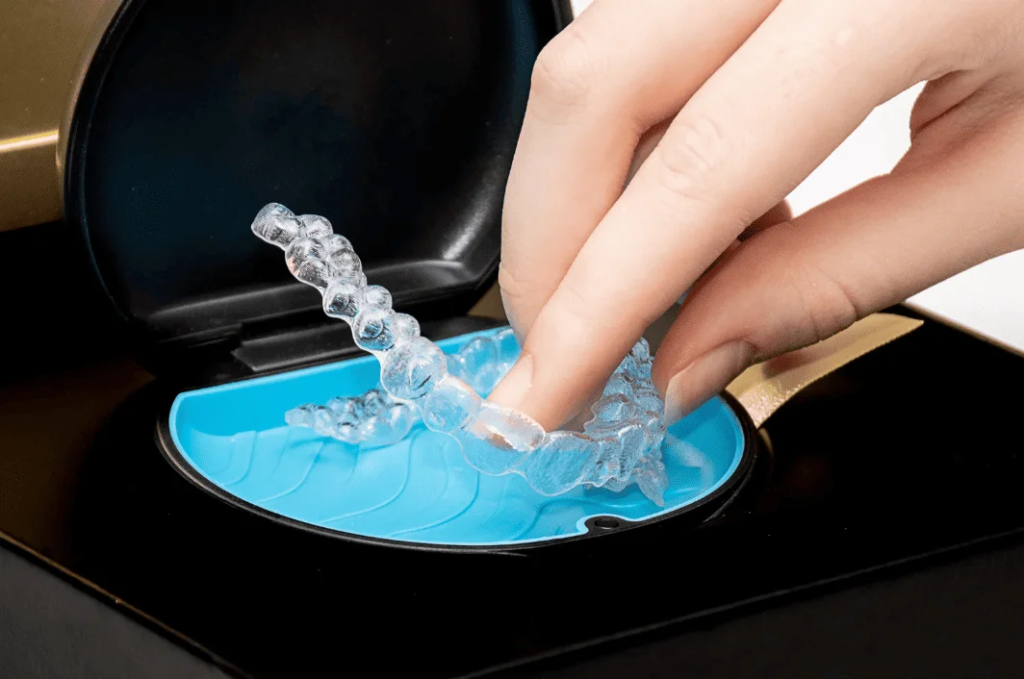
🏥Invisalign aligners: Your Customised Treatment Process
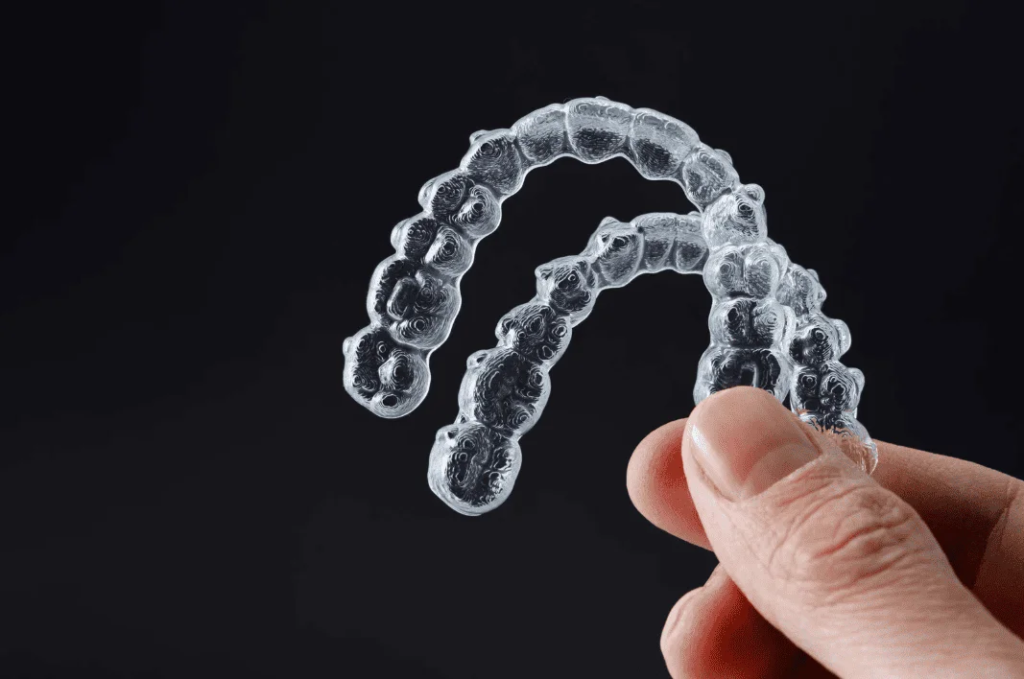
- At Bayside Dental Discovery Bay, our experienced dentists offer customised Invisalign treatment plans to suit your lifestyle. Using a series of removable aligners, we gradually move your teeth into their ideal positions.
- Treatment usually requires 12–15 clinic visits and takes around 12 to 24 months to complete, with no downtime needed. The process is generally divided into the following three main stages:
✅ Step 1: Initial Consultation and 3D Imaging
We start with a detailed consultation where we take photos, X-rays, and digital scans of your teeth. Using this information, we create a custom ClinCheck 3D treatment plan that maps out how your teeth will move over time.
✅ Step 2: Custom-made aligners
Based on the 3D treatment plan, we provide you with a series of custom-made aligners. You will wear each aligner for about 1-2 weeks before moving to the next set, progressively shifting your teeth into the desired position.
✅ Step 3: Progress monitoring
You’ll visit our clinic every 6-8 weeks to monitor your progress and receive new sets of aligners. After completing the treatment, we will provide retainers to maintain your new smile.
2026 Orthodontic Treatment Fee Reference
Treatment costs vary depending on individual needs, such as treatment duration and whether additional procedures are required. The following fee ranges are based on the private patient fee schedule of The Prince Philip Dental Hospital and are intended for reference only:
| Treatment | Fee (HKD) |
| Treatment Planning | $2,000 – $3,000 |
| Clear Aligner – 1 Arch | $45,000 – $50,000 |
| Clear Aligner – 2 Arch | $60,000 – $80,000 |
| Fixed Appliance – Single Arch | $35,000 – $50,000 |
| Comprehensive Fixed Appliances | $45,000 – $70,000 |
| Lingual Fixed Appliances | $100,000 – $200,000 |
| Removable Appliance/Functional Appliance | $24,700 – $35,000 |
| Herbst Appliance | $24,200 – $35,000 |
| Rapid Maxillary Expander / Transpalatal Bar / Lingual Holding Arch Bar / Space Maintainer (Band-Loop Type) | $24,800 – $35,000 |
| Retainer (per visit) | $1,500 – $2,500 |
💡 Conclusion
- Orthodontic treatment is typically a journey lasting 12 to 24 months. The initial phase may come with some discomfort, but by mastering the right cleaning techniques, dietary habits, and strategies to manage discomfort, these challenges can be easily overcome.
- If you prefer greater dietary freedom, a simpler cleaning routine, and a more comfortable experience, clear aligners may be the better choice for you. Whichever option you choose, the end of this journey is a healthier, more confident smile.
Bayside Dental Discovery Bay | Same‑Day Appointments Available
Ready to enjoy a more confident smile? Book a consultation at Bayside Dental Discovery Bay, and let us help find the orthodontic solution that’s right for you.
Frequently Asked Questions About Cleaning Teeth with Braces
How long does orthodontic treatment usually take?
Most treatments last between 12 and 24 months, depending on the complexity of your case, the type of braces you choose, and how well you follow care instructions.
Mild cases may be faster, while complex bite issues may take longer.
Is there a difference in treatment duration between fixed braces and clear aligners?
Both typically take 12–24 months.
However, clear aligners may be slightly faster for mild to moderate cases, while fixed braces are often better for complex cases that might need more time.
Your orthodontist will give you a personalised estimate.
Can I drink coffee or tea with braces?
Yes, but elastic bands on fixed braces may stain.
Using a straw and choosing clear or tooth‑coloured bands can help.
Clear aligners are not affected.
Can I eat curry with braces?
Curry may stain the elastic bands of fixed braces, but the braces themselves are fine.
If you’re concerned about appearance, you can avoid it temporarily.
Clear aligners can be removed while eating, so no staining issue.
How long after an adjustment can I eat normally?
Sensitivity usually lasts 2–3 days.
Stick to soft foods during that period.
You can generally resume your normal diet within a week.
How often should I have a professional cleaning while in braces?
Every 3–6 months.
Professional cleanings remove tartar that daily brushing can’t reach, helping prevent gum disease and cavities.
Are clear aligners suitable for everyone?
Clear aligners work best for mild to moderate alignment issues.
Complex cases may be better treated with fixed braces (metal or ceramic).
Your orthodontist can recommend the best option after assessment.
What if a bracket or wire comes loose?
Use orthodontic wax to cover any sharp edges and contact your orthodontist as soon as possible.
If you lose or damage an aligner, wear the previous set and call the clinic immediately.
Will braces affect my speech?
Some temporary lisping or adjustment in pronunciation is common during the first few days, especially with fixed braces or new aligners.
Most people adapt within a week.
How can parents help a child with braces?
Parents can supervise their child’s cleaning routine, especially using interdental brushes and water flossers; limit sugary and sticky snacks; and encourage regular check‑ups to build good habits.
If you’re concerned about your child’s early‑stage dental issues, feel free to check out our previous blog: 2026 Guide to Cavities in Baby Teeth
Can I chew gum with braces?
Fixed braces and gum don’t mix – gum can stick to brackets and wires, making cleaning much harder.
Clear aligners can be removed before chewing gum, but teeth should be cleaned before reinserting.
How long do I need to wear a retainer after braces?
After treatment, retainers help keep teeth in place.
Full‑time wear (except for eating and brushing) is typically recommended for the first six months, followed by nightly wear for at least 1–2 years. Some cases require longer.
How can I prevent bad breath during orthodontic treatment?
Good oral hygiene is key.
Clean your teeth thoroughly after meals, use interdental brushes to remove trapped food, and schedule regular professional cleanings.