A sinus lift, also called sinus augmentation, is a bone graft for dental implants in the upper back jaw. When there isn’t enough bone height above missing upper premolars or molars to hold an implant securely, the dentist gently raises the floor of the maxillary sinus and fills the space underneath with bone graft material. Once that area has enough bone, the implant can go in. If you have been told you “don’t have enough bone” for dental implants, that usually does not rule implants out. This guide covers what the procedure involves, who needs it, the two main techniques, how recovery goes and what it costs in Hong Kong.
What is a sinus lift?
Your maxillary sinuses are air spaces that sit behind your cheeks, directly above the upper back teeth. The roots of those teeth, and the bone around them, lie just beneath the sinus floor.
After an upper back tooth is lost, two things tend to happen. The jawbone loses the stimulation it used to get from chewing, so it gradually shrinks. At the same time, the sinus can expand downward into the space. The result can be a thin layer of bone that is too weak to anchor an implant.
A sinus lift deals with that directly. The dentist lifts the thin membrane lining the sinus floor and places graft material in the gap, building the bone back up to a height an implant can use. You may see it described as a sinus lift, sinus augmentation or maxillary sinus lift. They all refer to the same procedure.
Who needs a sinus lift?
Not everyone who needs an upper back implant will need a sinus lift. It only comes up when the bone at the implant site is too short. That bone loss is usually a normal physiological process, not something you did wrong. The common reasons are:
- Natural anatomy. Some people simply have larger sinuses, or tooth roots that sit very close to the sinus floor.
- Bone loss after tooth loss. Without chewing forces, the jawbone resorbs over time.
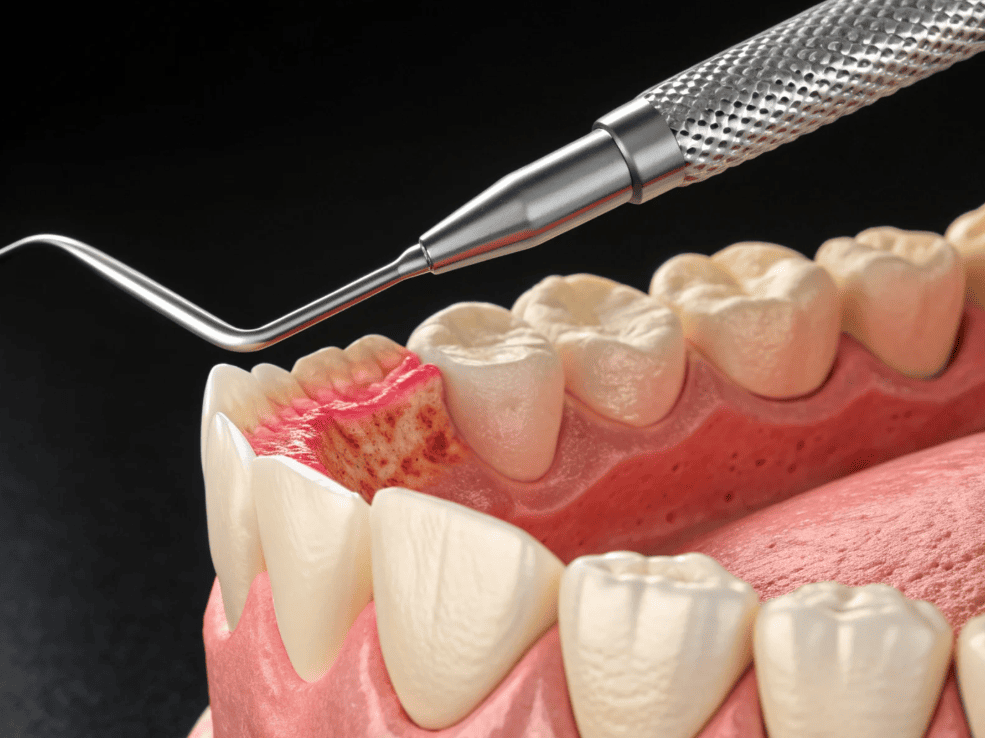
- Gum disease. Periodontal disease can destroy the bone that supports the teeth, sometimes before a tooth is even lost. Our guide to gum disease stages and treatment explains how that progresses.
How your dentist assesses the bone
Before planning an implant, dentists generally use imaging, such as a 3D scan, to measure the bone height at the site and look at the shape of the sinus. That assessment tells the dentist whether a sinus lift is needed at all, which technique fits your situation and whether the implant can be placed in the same procedure.
Lateral window vs crestal sinus lift
There are two main ways to do a sinus lift. Your dentist chooses between them based on how much bone you have left.
| Lateral window (traditional) | Crestal (minimally invasive) | |
|---|---|---|
| Suited to | More significant bone loss | Moderate bone height |
| How the sinus is reached | A small “window” is made in the side of the jaw, and the membrane is lifted through it | The membrane is lifted gently through the small hole prepared for the implant, often using water pressure (hydraulic) or special compacting instruments |
| When the implant goes in | Usually after about 4 to 9 months of healing | Graft and implant are often placed at the same visit |
| After surgery | Some swelling, mild discomfort or minor bleeding for a few days is normal | Swelling is usually minimal, with little bruising |
| Overall timeline | Longer | Shorter |
Same-visit or staged implant?
With a crestal lift, the bone graft and the implant are often placed in one appointment. With a lateral window lift, treatment is usually staged: the graft goes in first, then heals for about 4 to 9 months while it turns into your own bone, and the implant is placed after that.
Neither approach is a matter of preference. The right one depends on your bone, and your dentist will explain the choice once the imaging has been reviewed.
What happens during sinus lift surgery?
A sinus lift is done under local anaesthesia, so the procedure itself is generally painless once the anaesthetic has taken effect. If you feel anxious about dental surgery, ask your dentist about sedation dentistry.
Lateral window, step by step
- Access. A small incision is made in the gum, which is gently folded back to expose the bone.
- Window. A small opening is made in the bone, revealing the sinus membrane beneath it.
- Lift. The membrane is carefully pushed upward, creating a space between it and the jawbone.
- Graft. The space is filled with bone graft material. This can be donor bone, synthetic bone or, in some cases, your own bone.
- Closure. The gum is stitched closed. Over the following months the graft material becomes your own bone, ready to support an implant.
The crestal approach
The dentist prepares the small hole for the implant first, then uses it to lift the sinus membrane gently from below, often with water pressure or compacting instruments, before adding graft material. In many cases the implant is placed straight away, so there is no separate window and no second surgery for the implant.
Sinus lift recovery timeline
Everyone heals at a different pace, so treat this as a general guide. Your dentist will tell you how your own recovery is going.
| Stage | What’s typical | What to do |
|---|---|---|
| First few days | Some swelling, mild discomfort or minor bleeding, which is normal | Follow your dentist’s instructions and take any medication as prescribed |
| About 3 to 5 days | Mild soreness or stuffiness, a bit like mild sinus discomfort | Check that symptoms are easing day by day |
| First 1 to 2 weeks | The lifted membrane is still settling and sensitive to air pressure | No nose-blowing, sneeze with your mouth open, no heavy lifting, no straws |
| Crestal lift | The implant is often already in; swelling is usually minimal | Attend the next step your dentist schedules |
| Lateral window: about 4 to 9 months | The graft gradually turns into your own bone | The implant is placed once there is enough bone |
Once the implant is in, it is finished with a custom-made crown. Our crowns and bridges page has more on crowns.
Sinus lift aftercare: do’s and don’ts
| Do | Don’t (first 1 to 2 weeks) |
|---|---|
| Follow your dentist’s aftercare instructions and take medication as directed | Blow your nose |
| Sneeze with your mouth open | Use a straw |
| Contact your dentist if symptoms get worse or you’re unsure about anything | Lift anything heavy |
All three restrictions are there to keep changes in air pressure from disturbing the newly lifted sinus membrane.
As with other oral surgery, some swelling, mild discomfort or minor bleeding in the first few days is common, and the 1 to 2 weeks of restrictions protect the lifted membrane and the graft site. Your dentist will explain the risks that apply to you at the assessment. If symptoms are getting worse rather than easing, or you are unsure about how the area is healing, contact your dentist promptly.
How much does a sinus lift cost in Hong Kong?
For a public reference point:
| Item | Reference fee | Source |
|---|---|---|
| Bone grafting (including sinus lift) | About HK$6,000 to 15,000 | Prince Philip Dental Hospital private-patient fee schedule |
- Implant fees are charged separately.
- This is for reference only. Your actual fee is confirmed after examination and consultation.
Because a sinus lift is a preparatory step, plan its cost together with the implant itself. Our dental implants page walks through the full treatment. Bayside Dental Discovery Bay has two clinics, at DB North Plaza and DB Plaza (Main Plaza), and your dentist will let you know after an examination whether you need a sinus lift and which approach suits you.
Frequently asked questions
What is a sinus lift?
A sinus lift is a bone graft in the upper back jaw that prepares the area for a dental implant. The dentist gently raises the membrane lining the floor of the maxillary sinus and places bone graft material underneath, adding the bone height an implant needs.
How painful is a sinus lift?
It is done under local anaesthesia, so the procedure itself is generally painless once the anaesthetic takes effect, and sedation can be discussed if you are anxious. Afterwards, expect mild soreness or stuffiness for about 3 to 5 days. Swelling after a crestal lift is usually minimal.
How long does it take to recover from a sinus lift?
Most people have mild soreness or stuffiness for about 3 to 5 days, with some swelling or minor bleeding early on. Avoid nose-blowing, straws and heavy lifting for the first 1 to 2 weeks. A lateral window graft needs about 4 to 9 months before the implant.
How long after a sinus lift can I get an implant?
It depends on the technique. With a crestal (minimally invasive) lift, the graft and implant are often placed at the same visit. After a lateral window lift, the graft usually needs about 4 to 9 months to turn into your own bone before the implant goes in.
What are the downsides of a sinus lift?
It adds a surgical step and its own fee to implant treatment, and the lateral window technique adds a healing wait of about 4 to 9 months. Expect a few days of swelling, soreness or stuffiness, and 1 to 2 weeks of restrictions such as no nose-blowing.
How much does a sinus lift cost in Hong Kong?
As a public reference point, the Prince Philip Dental Hospital private-patient fee schedule lists bone grafting (including sinus lift) at about HK$6,000 to 15,000, with implant fees charged separately. This is for reference only; your actual fee is confirmed after examination and consultation.
What is the success rate of a sinus lift?
It varies from person to person. The amount of bone left at the implant site, the health of your gums and how closely you follow the aftercare instructions, such as not blowing your nose for the first 1 to 2 weeks, all play a part. Your dentist will explain what to expect in your case after the assessment.
Is a sinus lift the same as a bone graft?
A sinus lift is one type of bone graft, used in the upper back jaw below the sinus. It raises the sinus floor and places graft material in the space created, which over the following months becomes your own bone. Hong Kong reference fee lists, including those based on the Prince Philip Dental Hospital schedule, group it under bone grafting.